I decided it was time for me to see the movie “Carrie.” After watching, I now know why my dad was a bit reluctant to name me Carrie (Kari). I know that there is already a post discussing the plot of this particular film, therefore I will spend little time really summarizing the plot step by step.
Carrie is a quiet, almost innocent looking, high school girl. As watching you really seem to feel bad for her. She is teased by all the other girls at school and who knows what all her mother is doing to her throughout this film. Her mother is very religious woman, almost to extremes, that won’t let her daughter be a teenage girl. You just have this very weird feeling whenever in the presence of the mother. Her daughter starts her period and for some reason this sends her into a frenzy. It is all very strange and unsettling.
I believe this film really shows an example of Freeland’s art-dread, with a mixture of Carroll and Schneider in there to some degree. The whole movie you just have this feeling that something isn’t right. It was unnerving, disturbing, and there’s just this sense of anxiety. What is going on in this girls head? I just wanted to tell the girls to stop teasing her, she is going to snap. I simply had that feeling that something could go horribly wrong.
Carrie is not necessarily a girl that you really fear, until the end that it is. She is the character you feel sorry for. I don’t think that in Carroll’s definition of a monster, Carrie would necessarily fit, but there are instances where you definitely fear her and are a bit disgusted. For instance, at her prom when the pig blood is poured onto to her and it is dripping down her face and body, I must admit it seemed a bit monstrous looking to me. It was disgusting, but at the same time it was unnerving. At this point you still feel bad for her and then she snaps. I honestly was just waiting for something bad to happen. You have that feeling that something is going to go extremely wrong here. By now she is aware of her “magical” powers if you will. She has the ability to move objects. Her mother refers to them as devil powers, bringing a bit of the supernatural into this film. She then basically kills everybody at prom.
The part that I found to be the most horrifying was the end, in which the girl that felt bad for the way she had treated Carrie, Sue, seemed to be sick from shock. In her dreams she is bringing flowers to Carrie’s house and all of a sudden Carrie’s bloody arm comes out and grabs her. This was definitely not expected considering the house had fallen on Carrie and her mother. It created that startle effect as well as a bit of what Schneider discussed with built up suspense followed by a sudden surprise. In a sense, this whole movie is suspense with a sudden surprise. From the beginning you just get this feeling something is not right and then comes prom.
This film is a prime example of a postmodern horror film. This is definitely more of a pessimistic film. Good does not conquer evil; she kills everybody, even the people that were nice to her. It doesn’t seem as though one person is left alive except for Sue (who had her boyfriend, Tommy, take Carrie to the prom because she felt bad for teasing her; when Sue showed up at prom, the gym teacher thought she was up to something and escorted her out). There really is no closure in this film and you are left to wonder whether she is dead or alive. You are not reassured that she is in fact dead, as in lifeless. She does have powers.
In a lot of ways this does have relevance in today’s society. While the powers I don’t feel to be realistic or plausible, the idea behind this film is not completely implausible. I don’t want to really get into this topic too far, but there are instances such as Columbine, or even the more recent Virginia tech incident. While it is not necessarily realistic in the way that Carrie did this, I do think that this has a natural or real horror mix to this as well. There is this fear.
Thursday, May 24, 2007
Halloween-Not Just Another Holiday
I would have to agree with those critics who rank Halloween as one of the most horrific movies of all time. After viewing the film, there are several instances throughout the entire movie that are unnerving.
The movie begins in what seems like an ordinary neighborhood, Haddonfield. You see a little boy dressed in a clown suit who for no apparent reason, murders his sister and ends up catatonic. The psychologist working on his case, Dr. Loomis, is well aware that there is something out of the ordinary with this young man...that he is pure evil. He argues that the facility he is being held in is not secure enough, but is told that Michael Meyers, our monster in this case, will stay there. They will soon regret this decision.
We are then introduced to another of our main characters, Laurie, who happens to be Michael's younger sister. She is living in the town of Haddonfield and becomes the object of Michael's attention after he escapes from the sanitarium where he has been for the past 15 years.
As he continues pursuing her, Laurie spots Michael wearing his white mask on several occasions. She is unaware of who he is until he goes on a murderous spree with her being the last target among her friends. She escapes and our monster is again reconnected with Dr. Loomis, who shoots him 6 times. Michael falls over a second story balcony and he is gone for good-or is he?
The movie involves so many aspects of horror. In this film there is the element of sound that is involved. Everybody can tell what movie is playing if they hear the theme music from the movie. You also have this monster in his signature white mask that gives you an eerie feeling. And if all that isn't enough, you are confronted with the run down house that has been boarded up for years since the murder and it looks like such an eyesore in the neighborhood that you can't help but think something not quite right went on there.
I've seen this movie a couple of times and I still have a hard time watching it before I go to bed. If you get the creeps easily, I would recommend you save this movie for a bright and sunny lazy day. Keep the lights on, you'll be glad you did.
The movie begins in what seems like an ordinary neighborhood, Haddonfield. You see a little boy dressed in a clown suit who for no apparent reason, murders his sister and ends up catatonic. The psychologist working on his case, Dr. Loomis, is well aware that there is something out of the ordinary with this young man...that he is pure evil. He argues that the facility he is being held in is not secure enough, but is told that Michael Meyers, our monster in this case, will stay there. They will soon regret this decision.
We are then introduced to another of our main characters, Laurie, who happens to be Michael's younger sister. She is living in the town of Haddonfield and becomes the object of Michael's attention after he escapes from the sanitarium where he has been for the past 15 years.
As he continues pursuing her, Laurie spots Michael wearing his white mask on several occasions. She is unaware of who he is until he goes on a murderous spree with her being the last target among her friends. She escapes and our monster is again reconnected with Dr. Loomis, who shoots him 6 times. Michael falls over a second story balcony and he is gone for good-or is he?
The movie involves so many aspects of horror. In this film there is the element of sound that is involved. Everybody can tell what movie is playing if they hear the theme music from the movie. You also have this monster in his signature white mask that gives you an eerie feeling. And if all that isn't enough, you are confronted with the run down house that has been boarded up for years since the murder and it looks like such an eyesore in the neighborhood that you can't help but think something not quite right went on there.
I've seen this movie a couple of times and I still have a hard time watching it before I go to bed. If you get the creeps easily, I would recommend you save this movie for a bright and sunny lazy day. Keep the lights on, you'll be glad you did.
Faith

The Exorcist could quite possibly be the best example of religious-based horror. There seems to be a conflict between religion and science in this film that gets resolved in the final scenes. Not only non-believers, but also those in practice of it question faith throughout the film.
The main character, Chris MacNeil is not a religious woman. But when her daughter Regan becomes “sick,” and medicine cannot cure her, Chris is forced to turn to religion.
In her struggle to find a cure for her daughter, Chris finds Father Karras. Father Karras is experiencing a debate about his own faith when Chris comes to him. He is constantly struggling between religion and science. The noticeable conflict would be that he is not only a priest, but he also is trained in psychology. Though his practice is in priesthood, he relies heavily on medicine over faith. He feels at a loss when someone comes to him with problems that have to do with religion. In the scene involving Father Karras during mass, it shows his strain and doubt of faith when he labors through the words of the consecration.
In the Exorcism sequences of the film, Father Karras’ doubts about his faith are wiped away when he confronts the demon in Regan. He leaps on the devil-possessed Regan and then leaps through the window before the demon could fully possess him. This ritualistic sacrifice comments on the relationship that exists between exorcism and the Mass. Father Karras commits suicide, a moral sin that means automatic excommunication and external damnation in the Catholic Church.
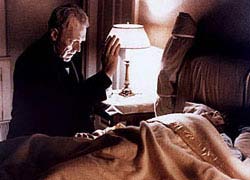
By the conclusion of the film, Father Karras has absolved his sins before his selfless sacrifice, so he dies faithful, guiltless, and redeemed. His sacrifice and successful exorcism has instilled in Chris a sense of faith, which shows the simultaneous reestablishment of faith in both man and God.
The overall message of this film: If we have faith in nothing else except man, then there is no possibility of salvation. If faith in man is gone, the only thing left to save us is the belief in something higher.
The Ring

The movie The Ring I found to have three theories combined into one movie. It follows Carrols account of what a movie needs to include to be Art-Horror. The movie has a monster that is threatening since it haunts and goes after each person that has watched the tape. Each individual has exactly seven days before they die. The monster is disgusting her skin is pale almost a blue color and with long dark hair hanging in front of her face. Most of the time you didn’t see her face, but when you did her eyes were yellow, mouth dark and face a very blue color with red veins coming thru the skin. The monster is in all impure from her lightly talked voice, the way she crawls to get the individual on the seventh day and how innocent you think she is. One scene that stands out of my mind is towards the end of the movie and you think that Samara is free from harming others. She comes back to get Noah and she crawls out of the television and when she looks up you can see how disgusting and scary her face really is. After each person dies they are found with a signature facial expression. Their faces are struck in a position as they were screaming of terror or for help the movie never exactly tells you. This movie’s monster also falls under the condition that scientist today could not prove of such thing to actually occur.
I saw Freeland’s account throughout the movie which co-insides with Carrols account. Along with the fear and disgust there was a sense of Art-dread. The movie brought anxiety to each scene because you were unsure of who was going to get hold of the tape next or if the main character Rachel was going to survive by finding the answers. The theme of good and evil was also portrayed throughout the film. The whole story behind what happened to Samara who is the monster is so evil and how she goes after these innocent people just so she can be heard is worse. I think a horrible scene is when Rachel wakes up from having a nightmare and hears the television on in the other room and comes to find out that her son Aidan had watched the tape also. By the end of the movie I believe they answer most of the micro questions that I had been wondering about, but not the macro question. This led me to think of many conclusions that could have occurred. Although the questions were answered they were very vague and generalized which also described Freeland’s account.
The spectator emotion was shown I felt which is part of Schneider’s account. Although you heard the story that you would die in seven days if you watched the tape you wanted to know what was on the tape. Once the first death of Katie happened and you found out that her friends that watched it with her also at the same time you wanted to know how it worked. Each time someone dies was different in a unique way which I also wanted to know who and how was the next person going to die. For example when Rachel and Aidan go to Katie’s layout at their home the mother keeps saying I saw her face and the way she looked she didn’t just die because her heart stopped it had to be something else.
I found the use of sounds and color were a big part of this film. Mostly everything throughout the film was down and dreary. Everyone wore light tops and darker bottoms even the houses didn’t have bright colors. The color red would arrive in the movie when a new victim watched the movie or was about to die on their seventh day. At the end of the movie you see the significance of the color because it comes from a tree that Samara looked at everyday before she was killed by her mother. Example of this is when Rachel is watching the movie and the color red rises through the window into the house as if it were the sun. The movie seemed to do the exact opposite of what I thought for the music. When the monster was approaching it played the same tone throughout , but it wasnt loud it was softer. They used loud music for when you think something is going to happen, but doesn’t. For example when a train flew bye it was loud, but when the monster was coming it was like a tune o the piano.
After viewing the movie I looked at some extra features that were on the movie. In these special features it showed a trailer for the movie Ringu and also talked about it which I found interesting. This movie the Ring seemed to have originated from Ringu just like the Grudge we watched in class except it was called Ju-on. Although it seemed like Ringu was very different from The Ring you could see many techniques and some plot features that were similar. I just found it very interesting how they showed an extra on this movie which Americans took off from.
There is a sequel to The Ring which was made in 2005 and begins exactly where the first Ring ends off. Although the main characters try to get away from the wrath of Samara she seems to find them and continue her terror and to be heard.

Wednesday, May 23, 2007
DiStUrBiA
For those who have not seen this movie this paragraph will provide a brief summary of Disturbia, but if you are interested in seeing it please don’t read on. Shia LaBeouf is playing a teen who has just lost is father and is very distraught. He can’t concentrate and doesn’t care about school anymore. In class he takes his anger a little too far and punches his teacher in the face. After this incident he is taken to court and put on house arrest for three months. Due to boredom he starts to spy on his neighbors and suspects one of them to be the one that is killing women.
Disturbia, a film that is under the horror genre has horrifying scenes, but also shared comedy and a complex discovery plot. The complex discovery plot starts with the onset when Kale (Shia LaBeouf) notices his neighbor Mr. Turner (David Morse) has a ’69 Blue Mustang with a dented fender that fits the description of the car that was seen when a girl went missing. This is when Kale makes the link that this guy could be a killer. There is controversy whether Mr. Turner truly is a killer or not. The discovery begins while Kale is spying on Mr. Turner and explains to his friend Ronnie (Aron Yoo) and Ashley (Sarah Roemer) that he could be the evil being who kills young women. Kale begins investigating Mr. Turner’s home by diligently watching daily activites. Kale also has his friend Ronnie break into his car and retrieve the code for his garage. The confirmation stage is extended throughout the movie because the audience does not know for sure if Mr. Turner is the true serial killer or not. Kale tries to convince his mom that he is the killer, but she along with the police do not believe him because of all the trouble he has been in. According to Carroll this is what draws us to watch films and in this movie it is very important because it’s why Kale has to confront the killer and save his mom, friends, and himself. The confrontation can be found in several different scenes. There is a scene where Mr. Turner stops Ashley in a parking garage and gets in her car to tell her to leave him alone and allow him to have his privacy. This scene provoked suspense because it wasn’t obvious if he was going to hurt her. The ultimate confrontation is displayed at the end of the movie where Kale learns from his videotape a face of a dead young woman. He realizes his mom is over the killer’s house at that moment trying to convince Mr. Turner not to press charges because Kale and his friend Ronnie broke into his house that night. The killer duct tapes Kale’s moms’ mouth, arms, and legs and puts her in his hiding place. He then shows up over Kale’s home where he smashes Ronnie in the head and duct tapes Kale’s hands and mouth. Ashley comes to the rescue and jumps on the killers back leaving time for Kale to get up and hit him. Ashley sets Kale free. Kale jumps out of his bedroom window into the neighbor’s pool and runs to the killer’s house. He finds where the killer has been keeping all the dead bodies. He eventually discovers his mom, still alive and saves her while killing the evil Mr. Turner.
This movie along the lines of Carroll is not art-horror, but natural horror. The monster is a human being not a fictional monster or supernatural entity. I consider Mr. Turner a “monster” because he is very fearsome, disgusting, and impure. He killed young women and dismembered their bodies, which is very horrifying. Also this is considered natural horror because in real life there are such things as serial killers. I thought this movie was interesting because of the confirmation stage and how good conquer evil in the end. The movie is filled with suspense, horror, and comedy. The suspense is accompanied according to Carroll with micro and macro questions. In Disturbia we see the macro question as will Kale, his family, friends, and the neighborhood survive this serial killers wrath? A micro question in the movie is will Kale and Ashley become more than just acquaintances? From these questions we locate suspense in the movie because we are on the edge of our seats wondering what is going to happen next. The scene that provoked horror to me was the scene where Kale is fighting for his life and his mother’s life. He is in a dark, dreary, wet, and dirty basement trying to find his mom and when he does the killer appears suddenly from behind her and attacks Kale, but Kale is triumphant. This scene was very horrifying to me because I felt the fear behind Kale and the other victims that had been attacked by this serial killer. The movie also had a light side to it with the comedy that was thrown in. There were a few scenes where the audience in the theater laughed out loud.
So what makes one choose to go see a movie over another? I believe this has to do with plot. When I look up movies I read reviews and learn the basic storyline. The ones that interest me are due to the plot. I believe this movie has an intriguing plot and is worth watching. It is not the best movie I have seen, but if you want a movie that is entertaining with some scenes of horror you should see it. Also I believe that the acting in this movie was very well done, I give Shia LaBeouf a lot of credit because I didn’t know if he could pull it off, being a ex Disney star, but he did.
Disturbia, a film that is under the horror genre has horrifying scenes, but also shared comedy and a complex discovery plot. The complex discovery plot starts with the onset when Kale (Shia LaBeouf) notices his neighbor Mr. Turner (David Morse) has a ’69 Blue Mustang with a dented fender that fits the description of the car that was seen when a girl went missing. This is when Kale makes the link that this guy could be a killer. There is controversy whether Mr. Turner truly is a killer or not. The discovery begins while Kale is spying on Mr. Turner and explains to his friend Ronnie (Aron Yoo) and Ashley (Sarah Roemer) that he could be the evil being who kills young women. Kale begins investigating Mr. Turner’s home by diligently watching daily activites. Kale also has his friend Ronnie break into his car and retrieve the code for his garage. The confirmation stage is extended throughout the movie because the audience does not know for sure if Mr. Turner is the true serial killer or not. Kale tries to convince his mom that he is the killer, but she along with the police do not believe him because of all the trouble he has been in. According to Carroll this is what draws us to watch films and in this movie it is very important because it’s why Kale has to confront the killer and save his mom, friends, and himself. The confrontation can be found in several different scenes. There is a scene where Mr. Turner stops Ashley in a parking garage and gets in her car to tell her to leave him alone and allow him to have his privacy. This scene provoked suspense because it wasn’t obvious if he was going to hurt her. The ultimate confrontation is displayed at the end of the movie where Kale learns from his videotape a face of a dead young woman. He realizes his mom is over the killer’s house at that moment trying to convince Mr. Turner not to press charges because Kale and his friend Ronnie broke into his house that night. The killer duct tapes Kale’s moms’ mouth, arms, and legs and puts her in his hiding place. He then shows up over Kale’s home where he smashes Ronnie in the head and duct tapes Kale’s hands and mouth. Ashley comes to the rescue and jumps on the killers back leaving time for Kale to get up and hit him. Ashley sets Kale free. Kale jumps out of his bedroom window into the neighbor’s pool and runs to the killer’s house. He finds where the killer has been keeping all the dead bodies. He eventually discovers his mom, still alive and saves her while killing the evil Mr. Turner.
This movie along the lines of Carroll is not art-horror, but natural horror. The monster is a human being not a fictional monster or supernatural entity. I consider Mr. Turner a “monster” because he is very fearsome, disgusting, and impure. He killed young women and dismembered their bodies, which is very horrifying. Also this is considered natural horror because in real life there are such things as serial killers. I thought this movie was interesting because of the confirmation stage and how good conquer evil in the end. The movie is filled with suspense, horror, and comedy. The suspense is accompanied according to Carroll with micro and macro questions. In Disturbia we see the macro question as will Kale, his family, friends, and the neighborhood survive this serial killers wrath? A micro question in the movie is will Kale and Ashley become more than just acquaintances? From these questions we locate suspense in the movie because we are on the edge of our seats wondering what is going to happen next. The scene that provoked horror to me was the scene where Kale is fighting for his life and his mother’s life. He is in a dark, dreary, wet, and dirty basement trying to find his mom and when he does the killer appears suddenly from behind her and attacks Kale, but Kale is triumphant. This scene was very horrifying to me because I felt the fear behind Kale and the other victims that had been attacked by this serial killer. The movie also had a light side to it with the comedy that was thrown in. There were a few scenes where the audience in the theater laughed out loud.
So what makes one choose to go see a movie over another? I believe this has to do with plot. When I look up movies I read reviews and learn the basic storyline. The ones that interest me are due to the plot. I believe this movie has an intriguing plot and is worth watching. It is not the best movie I have seen, but if you want a movie that is entertaining with some scenes of horror you should see it. Also I believe that the acting in this movie was very well done, I give Shia LaBeouf a lot of credit because I didn’t know if he could pull it off, being a ex Disney star, but he did.
Has Society Become Tolerant to Violence?
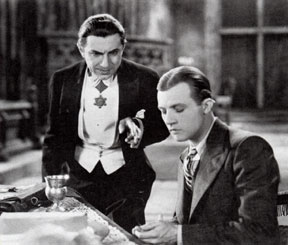
All over the news, all over the silver screen, all over the streets...violence is an every day occurence and constantly surrounds us. Half a century ago the most exciting event on the news was the weather. Now you can't get through a newscast without hearing reports of a murder, rape, or robbery. What has this society come to? Is it just "normal" to have this happen? Are we just supposed to accept this as an everyday occurrence and go on living our lives? What has happened over the years? Did our tolerance just gradually increase over time to watch such violence on television and not bat an eye? In the 1960's, people would watch a horror film and scream at the sight of Dracula leaning over his victim to sink his blood thirsty fangs in to their pulsing, soft flesh-but you wouldn't actually witness this for his cape would block your view and force the viewer to use his or her imagination. As Carroll would put it...this is art-horror at it's best. You have a monster who is threatening and also disgusting when he becomes crazed at the sight or smell of blood (disgusting). He evokes fear in the audience when he shows his fangs and those legandary bulging eyes before he strikes. But that is all you get..no blood or tearing of flesh; just a woman's scream and the crash of gothic music combined to send shivers down your spine. In today's age, though, that would be enough to bore one to tears. Why you ask? Because people want more, they don't want to leave anything to the imagination. They can see more in a commertial or a trailor to the latest scary movie than what you get in the older horror films such as Dracula. It seems as though plastic fangs and gothic music just doesn't cut it anymore. If 90% of the movie doesn't involve gore and the most detailed murderous scenes, people won't waste their time or money to watch it.
I conducted a small survey one evening during a time when my house was infested with twenty-year-olds because I was curious to see what these testosterone-filled minds thought of the horror film/genre. My results were as I expected. None of them would go see a movie that did not involve some sort of combat, fighting, or killing. They claimed to grow bored if the action was not persistant. They were even generous enough to come up with a small list of requirements for a "good" movie.
1. The movie must have violence of some sort (very specific list)
2. The movie must show excessive gore or gruesome scenes throughout the film.
3. Someone has to die-and die violently at that. The more blood the better the movie
4. The occasional "hot chick" would be just fine with them. They claim it makes the film well rounded and not all about violence. (see above requirements if you want a nice giggle)
5. The movie must be rated R because a PG-13 movie is not gruesome enough for their taste.
These young men grew up watching Power Rangers, Are You Afraid of The Dark?, Goosebumps, VR Troopers, Mortal Kombat, Alien, The Terminator, etc... This is mild compared to what they are into now, but much more violent and invasive than the Sesame Street and My Little Pony that I grew up watching.
If anyone is interested in why this country is going to Hell in a handbasket, maybe they should ask why the television industry is airing such violent shows to be viewed by the public and allowing more and more to be uncensored. Flashing a little icon in the upper right corner of the screen is not going to mean much to the kid who's parent's aren't attached to his hip. At least you can prevent a ten-year-old from seeing the newest slasher film in the theater; but once it hits the shelves he will have much less trouble getting his hands on it. It is very easy to see why this society is so tolerant to what they watch on television or what they witness on the playground. Violence surrounds us every day and the movie industry has an obligation to it's viewers to keep up with their needs or they know that they will lose business due to the fact that their viewers will grow bored. The post-modern horror is almost too outdated to be called post-modern. Will this thirst for violence and human destruction slow down, or will the horror genre become too horrifying to handle? I suppose only time will tell..
I conducted a small survey one evening during a time when my house was infested with twenty-year-olds because I was curious to see what these testosterone-filled minds thought of the horror film/genre. My results were as I expected. None of them would go see a movie that did not involve some sort of combat, fighting, or killing. They claimed to grow bored if the action was not persistant. They were even generous enough to come up with a small list of requirements for a "good" movie.
1. The movie must have violence of some sort (very specific list)
2. The movie must show excessive gore or gruesome scenes throughout the film.
3. Someone has to die-and die violently at that. The more blood the better the movie
4. The occasional "hot chick" would be just fine with them. They claim it makes the film well rounded and not all about violence. (see above requirements if you want a nice giggle)
5. The movie must be rated R because a PG-13 movie is not gruesome enough for their taste.
These young men grew up watching Power Rangers, Are You Afraid of The Dark?, Goosebumps, VR Troopers, Mortal Kombat, Alien, The Terminator, etc... This is mild compared to what they are into now, but much more violent and invasive than the Sesame Street and My Little Pony that I grew up watching.
If anyone is interested in why this country is going to Hell in a handbasket, maybe they should ask why the television industry is airing such violent shows to be viewed by the public and allowing more and more to be uncensored. Flashing a little icon in the upper right corner of the screen is not going to mean much to the kid who's parent's aren't attached to his hip. At least you can prevent a ten-year-old from seeing the newest slasher film in the theater; but once it hits the shelves he will have much less trouble getting his hands on it. It is very easy to see why this society is so tolerant to what they watch on television or what they witness on the playground. Violence surrounds us every day and the movie industry has an obligation to it's viewers to keep up with their needs or they know that they will lose business due to the fact that their viewers will grow bored. The post-modern horror is almost too outdated to be called post-modern. Will this thirst for violence and human destruction slow down, or will the horror genre become too horrifying to handle? I suppose only time will tell..
Filming Insanity
A plethora of highly regarded horror writers have had their tales put up on the silver screen in successful ventures. Films based on the writings of Stephen King, Clive Barker, and even Poe have generally met with success and have acquired large fan bases. However, not all horror authors (or, at the very least, authors of weird fiction) have had as much success on the screen. In the opinion of practically everyone that has both read his works and seen films based on his work, there is no film that truly captures the horror found in the works of H.P. Lovecraft. Is there something in his particular brand of horror that makes it unsuited for cinema, or has it just been unfortunate fate that no one with great skill has made the attempt?
First, one should look at Lovecraft’s writings and determine whether they would even fit the horror genre if applied directly to film. For this exercise, we shall consider the philosophy of Carroll. Lovecraft’s most famous tales (those most likely to be made into films) typically have to do with the Old Ones, alien beings that descended upon the Earth before the time of humans and lie beneath the sea neither alive nor dead. The “sleeping” Old Ones influence the transactions of all of humanity by means of magic and cults in an effort to be reawakened, at which point they will utterly undo all of human existence. Any attempt by a character to describe the beings involves incoherent rambling wherein Lovecraft imposes adjective after unrelated adjective in an effort to show the overwhelming nature of the beings and how they are unlike anything in human existence. For Carroll, this presents the story with a definite monster (an Old One). In his short tale, “The Call of Cthulhu”, he describes the first appearance of the story’s namesake in the following way: “The Thing cannot be described - there is no language for such abysms of shrieking and immemorial lunacy, such eldritch contradictions of all matter, force, and cosmic order. A mountain walked or stumbled.” For Carroll, this presents us with a host of impurities – it is nothing within the bounds of natural physics, and yet there it towers before its horrified discoverers. On top of that, as with all Old Ones, Cthulhu is previously described as being neither alive nor dead, but waiting to be awakened by its cult. Being neither alive nor dead exceeds our understanding of the natural world, and the fact that it can actively influence the world above whilst in a “sleep” is also a deviation from the norm. Furthering a Carrollian account of horror, in the next paragraph, we are told that, “Three men were swept up by the flabby claws before anybody turned.” This indicates that the monster is definitely a threat, killing three of its discoverers almost instantly. Finally, beyond its impurities, the maddening mountain was also physically disgusting, “Everyone listened, and everyone was listening still when It lumbered slobberingly into sight and gropingly squeezed Its gelatinous green immensity through the black doorway into the tainted outside air of that poison city of madness.” In this fashion, we have been presented with a monster that would satisfy Carroll’s criteria.
However, the plot is also important for Carroll. Taking the same short story into account, we are presented with a complex discovery plot (a common feature of Lovecraft’s tales). The onset is presented in the form of a first-person narration on the part of the nephew of a professor who did great, but secret, research on the Old Ones. He describes the collection of notes and trinkets that his great-uncle had acquired, and also tells of his death. The narrative continues into the discovery area of the plot, wherein the nephew connects many of the notes and trinkets in a manner most horrifying, implying that something is not as it seems. From there, we get the confirmation in the form of an account written by a sailor who uncovered the madness. This second-hand account, which seems to be driving our guide closer to insanity, involves the confrontation part of the plot, and demonstrates how utterly hopeless it is to challenge an Old One. In many of Lovecraft’s tales, the confirmation stage does involve a descent into madness, but the tale never enters the realm of the fantastic, there is always a strong display of the marvelous at hand. In this tale, and many of Lovecraft’s others, we are given a complex discovery plot.
Since we have the Carroll monster, and the Carroll plot, what is keeping us from having a good Lovecraft-based movie? I posit that it relates to Lovecraft’s penchant for assaulting us with adjectives. What may otherwise read as, “The men sight a stone pillar coming from the sea and, sailing to it, come upon a nightmarish coastline”, becomes in Lovecraft’s tale, “the men sight a great stone pillar sticking out of the sea, and in S. Latitude 47°9', W. Longitude l23°43', come upon a coastline of mingled mud, ooze, and weedy Cyclopean masonry which can be nothing less than the tangible substance of earth's supreme terror - the nightmare corpse-city of R'lyeh, that was built in measureless aeons behind history by the vast, loathsome shapes that seeped down from the dark stars.. Furthermore, Lovecraft presents us with scenes that truly defy visual interpretation, “. . . Johansen swears [one of his comrades] was swallowed up by an angle of masonry which shouldn't have been there; an angle which was acute, but behaved as if it were obtuse.” Passages like these are meant to overwhelm our senses with something that can hardly be imagined. In our vain attempts to visualize such images, we become fearful at the prospect that they are utterly unnatural. To commit an image to the silver screen automatically removes this quality from our mind, for if it is seen, than it can easily be described in ways that do not defy what is natural. So if one were to impose a set image onto Lovecraft’s “monsters”, they would lose their instantly maddening visages. If there were indeed some way to produce the monsters and environs on screen, then the plot should have no problem being transformed to suit the medium. After all, there are many other films with successful complex discovery plots, so Lovecraft’s plots should be able to make the step to film as well.
The plots of Lovecraft’s more well-known pieces of weird fiction would translate nicely onto the screen, but the unnerving scenes that come with them can only be viewed in the mind. Attempts to render them on screen serve to undo the horror found within and leave us only with more failed attempts at producing a successfully Lovecraftian film.


Heeeere's JOHNNY!
Stephen King’s horror novel, turned movie in 1980, "The Shining" tells the story of the Torrance family; Jack Torrance, and his wife and son, Wendy and Danny Torrance, as they relocate to the Overlook Hotel during the winter season. Upon taking a job as the Overlook’s caretaker, Jack Torrance and family take residence in the prestigious mountain-top hotel during the long winter months, as the hotel is closed to the public in fear of isolating weather. Unfortunately, what Jack’s employers forgot to mention is that the Hotel’s permanent residence will be remaining with him and his family during their stay. (Though, how would audiences react to the proverbial note card on the front door reading "Jack, please try not to upset the Ghosts!")
Jack Torrance doesn’t make light of his job at the hotel, a job he was warned was not easy. Jack discovers through the manager prior to his acceptance that previous caretakers have also been vigilant in their duties, to the point of extremes. The previous caretaker, Charles Grady, went mad during this tenure and brutally murdered his wife and two daughters. The manager of the Overlook warns Jack of the dangers of cabin fever; nevertheless, he accepts the job eagerly. Before the final close of the hotel, Danny Torrance meets with the hotel’s friendly head chef, Dick Hollorann, a man who is blessed with the same supernatural gift that he sees in young Danny. Dick calls this gift ‘the shining’. Referring to the power of telepathy, Dick is able to mentally speak to Danny and also warn him that his power will allow him to perceive things that normal people cannot, particularly, with horrible occurrences that have "left a trace" behind. It is later discovered that the ghostly residence of the Overlook Hotel have in one form or another all met a terrible end.
Within a short time following the family’s move to the hotel, strange occurrences begin to take place. Most notably, however is the lose of sanity from Jack as the days pass slowly. As a recovering alcoholic, Jack finds is new job stressful and often covets the drink that used to bring his mind at ease. He is also tries to set time aside for a new career in writing. One day while wondering the halls of the Overlook, Danny comes across the room 237. Having been warned by Dick that something horrible had happened in the room, he was told to stay out. However, he inevitably chooses not to follow that advice. The next scene shows Danny walking toward his parents with scratches and bruise marks over his body. Having been accused by Danny’s mother for the incident, Jack goes to the room to investigate. He finds a woman in the bathroom, and rising from the tube, Jack embraces her nude body. In a terrifying scene, Jack discovers from the reflection in the bathroom window that the woman is actually old…and dead. Terrified, he flees from the room.
The strange occurrences do not end there. Danny routinely sees terrible imagery and strange ghostly figures of the dead residence of the Overlook. Meanwhile, Jack seems to dwell deeper and deeper into insanity. Jack is eventually encouraged by the ghostly residence to attack Danny and his mother. In one of the most unforgettable scenes, Jack chases Wendy and Danny to their rooms in the hotel, where he tries to break through the bathroom door so he can kill them with an axe. The chase continues outside, as the ghost become visible as if watching the spectacle. Danny inevitably looses Jack in the on-sight maze in the hotel gardens, and Jack freezes to death in the winter storm.
The last scene shows a picture of a party on the hotel walls with Jack at the center and the date reading 1921. The suggested imagery is that evil is timeless and the ghost of the hotel are satisfied with this particular good time (the attempted killing of Jack’s family by his own hand. The supernatural elements of this film cannot be limited to one character, they all shared the burden of the hotel’s evil inhabitance, making for a brilliant horror film.
Jack Torrance doesn’t make light of his job at the hotel, a job he was warned was not easy. Jack discovers through the manager prior to his acceptance that previous caretakers have also been vigilant in their duties, to the point of extremes. The previous caretaker, Charles Grady, went mad during this tenure and brutally murdered his wife and two daughters. The manager of the Overlook warns Jack of the dangers of cabin fever; nevertheless, he accepts the job eagerly. Before the final close of the hotel, Danny Torrance meets with the hotel’s friendly head chef, Dick Hollorann, a man who is blessed with the same supernatural gift that he sees in young Danny. Dick calls this gift ‘the shining’. Referring to the power of telepathy, Dick is able to mentally speak to Danny and also warn him that his power will allow him to perceive things that normal people cannot, particularly, with horrible occurrences that have "left a trace" behind. It is later discovered that the ghostly residence of the Overlook Hotel have in one form or another all met a terrible end.
Within a short time following the family’s move to the hotel, strange occurrences begin to take place. Most notably, however is the lose of sanity from Jack as the days pass slowly. As a recovering alcoholic, Jack finds is new job stressful and often covets the drink that used to bring his mind at ease. He is also tries to set time aside for a new career in writing. One day while wondering the halls of the Overlook, Danny comes across the room 237. Having been warned by Dick that something horrible had happened in the room, he was told to stay out. However, he inevitably chooses not to follow that advice. The next scene shows Danny walking toward his parents with scratches and bruise marks over his body. Having been accused by Danny’s mother for the incident, Jack goes to the room to investigate. He finds a woman in the bathroom, and rising from the tube, Jack embraces her nude body. In a terrifying scene, Jack discovers from the reflection in the bathroom window that the woman is actually old…and dead. Terrified, he flees from the room.
The strange occurrences do not end there. Danny routinely sees terrible imagery and strange ghostly figures of the dead residence of the Overlook. Meanwhile, Jack seems to dwell deeper and deeper into insanity. Jack is eventually encouraged by the ghostly residence to attack Danny and his mother. In one of the most unforgettable scenes, Jack chases Wendy and Danny to their rooms in the hotel, where he tries to break through the bathroom door so he can kill them with an axe. The chase continues outside, as the ghost become visible as if watching the spectacle. Danny inevitably looses Jack in the on-sight maze in the hotel gardens, and Jack freezes to death in the winter storm.
The last scene shows a picture of a party on the hotel walls with Jack at the center and the date reading 1921. The suggested imagery is that evil is timeless and the ghost of the hotel are satisfied with this particular good time (the attempted killing of Jack’s family by his own hand. The supernatural elements of this film cannot be limited to one character, they all shared the burden of the hotel’s evil inhabitance, making for a brilliant horror film.
Tuesday, May 22, 2007
Who Needs Monsters !

When we get ready to watch a horror
movie, I expect to be horrified. I prefer
to be scared senseless! For me I, have high expectations
of a horror film. I need the suspense, blood,violence and
all. Not necessarily a monster but someone who is comp-
letely fearless and psycho. If one has these qualities for me
in a scaryor horror film then the movie will be great. It
provides me with a feeling,that someone could really do this...
it is possible.... .right? Then you will get theurge to look
over your shoulder when you are alone and that is when
you know you are horrified .
One of the movies that proves that
a monster is not needed is the movie Scream
. The psycho killer first starts off as a nice guy,
who invites the girl to friendly conversation ,then
wants her to play game. Friendly conversations turn
into a small city mass murder. This movie are more
realistic then any monster you could imagine.
A person committing this of crime in the way he did
was very horrifying. In the sense that this could
happen but what are the possibilities that I really can.
Movies that are made in realistic, contemporary setting
are more horrifying, then in a realistic setting with a
disgusting monsters. Everyone knows that monsters
do not exist. Also, knowing that you or someone you
know can come across a person this psychotic.
Typically these scenerios don't happen day ...but its
possible and that is why we are scared. I also
think when we see that someone else is afraid
of another person then that makesus afraid of
people even more, justbecause we know people are
more threatning and dangerousthan a monster that
never exists.In this day and age with all different
technology and much more adults raise theirchild-
ren, differently as well. I dont believe that a monster
can be created to be more scarrier, more threatning
or more decieving as a person. There has been so many
other movies where the psycho killer is friends with
the person he's going to killnext . So in closure humans,
at least psycho ones are scarrier by far.
A Foggy Nightmare

Imagine, it is a beuatiful, clear night without a cloud in the sky. We are listening to an old fisherman recounting the story of the history of the town. He says he has time for this one last story seeing as it was 11:55 PM. At 12:00 AM, 100 years prior, the fog rolled in. A clipper ship, seeing a camp fire on land, directed the ship toward it. They ran into treacherous rocks and the ship, The Elizabeth Dane, sunk taking its crew with it. The conspiritors who built the fire, plundered the gold from the ship and founded Antonio Bay. We are given the background of the story right at the beginning and immediately have a sense of unease.
The movie then leads into many strange events that are happening all over town. All of the payphones ring at the same time, jars break in the supermarket and everything starts to shake, lights mysteriously turn on, a gas pump falls and starts to pump gas, bells ring, cars lifted up in the shop like someone was doing work on the bottom, car alarms go off at the same time, TV turns on by itself and a chair moves on its own. Nick picks up a hitchhiker named Elizabeth and as they are driving, the car windows break without being hit by anything. The movie then cuts to a scene where three men are on a trawler drinking. They see the fog coming toward them and decide they need to dock the boat and go home. They notice that in the fog, there is a large ship which pulls up right next to them. The trollers generator blows and ghosts board the ship killing the three men. The fog rolls away, back the way it came which was against the wind. The movie shows one final scene from that night where Nick and Elizabeth are laying in bed and there is a mysterious knock on the door. Nick gets up to see who it is and he sees a hook. The clock behind him strikes 1:00 and the hook raises up and swings down and as this happens, the clock behind Nick breaks.
With these odd occurences, we are starting to feel art-horror. We don't know for sure what is going on or why. This lays the ground for the rest of the attacks on the people from Antonio Bay. We are unsure of the reason for the attacks at first, but we learn what really happened 100 years prior. The crew of the Elizabeth Dane were lepers. The towns people didn't want to have a community of lepers living anywhere near them so 6 conspirators formed the plan. Father Malone, the local minister, finds the diary of his grandfather who was also the town's minister and one of the six conspirators. The fog has come back to claim six lives which are taken as substitutes for the six conspirators. The rest of the movie shows us how Nick, Elizabeth, Father Malone, and Stevie, the towns local radio voice, solve this mystery of the fog.
I was highly disappointed with this film. It seemed to use alot of "cheap" scare tactics. It was unfortunate that we heard the story of what happened right at the beginning because it is pretty much giving away what is going to happen. After the first scene, I knew ghosts from the ship were going to come back and kill people from the town. Surprise surprise. There was no other plot to the story. I found myself thinking survival of the fittest as I was watching this movie because there were so many stupid things the people did. However, I will say that the element of suspense was there throughout most of the movie. Even though we knew who the monsters where and why they were there, we still wondered who was going to die and who would live. At the end of the movie, the ghosts had taken six lives, Father Malone being the last one, and the ghosts seemed content. The fog disappeared and everyone felt safe again.
All in all, the plot of The Fog could have been more interesting. The plot was the one thing that turned me away from enjoying this movie. I may have been scared a few times because I am a jumpy person, but mainly the movie was very predictable. I hope the remake made a few changes to give the story more of an interesting plot, but I doubt there was anything one could do to make the story line any better.
Monday, May 21, 2007
The Unknown
In the Haunting there was a question posed to Luke by the doctor and it pertained to someone seeing a lamp moving but, not seeing any visible matter moving it? Luke believed that nothing had moved the lamp but, the Doctor went on to explain that nothing could not have moved the lamp and that there was a force that could move this lamp even if at the time people did not understand this force. The Doctor goes on to explain the preternatural theory that states all supernatural forces can eventually be explained by science if not in ones lifetime then, eventually in another’s. All supernatural can be explained. The question of the lamp and the stated theory put questions on the understanding of the supernatural in horror movies and the way in which we may classify horror movies. What is the supernatural? Is the supernatural still the supernatural if it can be explained by science in any time? Is Carrols definition that the supernatural in horror movies is simply anything that can’t be explained by modern science, complete? How far would something have to be known in order for it not to be considered supernatural? Can the supernatural be in varying degrees? Is something still supernatural if a part of it can be explained by science but, the rest of it can’t be? Would the lamp that moved still be supernatural in a horror movie if scientist could explain that a force did move the lamp and that this force was natural? No, this lamp would not be supernatural according to Carroll and rightly so, but there is a gray area that appears when put into context of a so called horror movie. What if this same natural force knocks over all the lamps in the house at the same time and this house in particular has had a long history of a particular method of suicide carried out by every different owner that has occupied this house. Would the action of these lamps being knocked over be the supernatural in a horror movie? Carroll would say that no this is not the supernatural of horror movies yet but, rather it is in the fantastic realm. I would say yes though, that this is the supernatural in horror movies because there is still the unknown in why people would kill themselves in a particular method. This force seemingly explained by Science is not fully explained. There doesn’t have to be definitive proof to cause even the same art horror that carol claims to be elicited from his definition of art horror. The unknown even without a confirmation stage still creates art-horror through the cognitive evaluative which can be present without a monster. The unproven which cause hesitation can alone cause art horror. The supernatural which cause most art horror is due to the unknown lingering questions because the unknown is the supernatural present in horror movies.
In very early cultures forces of nature and phenomenon’s in nature were given personifications with harmful events such as drought being given a God that is unnatural and to whatever culture disgusting. Things such as rainfall were given beautiful Goddess’s. Why is it that these cultures gave harmful forces disgusting and unnatural Gods? The reason is because these types of things are unknown to us and are perceived of as a threat. Something is disgusting and seemingly unnatural because we do not understand why a thing would be created that would look so different than anything we are used to seeing. This thing’s actions as well come into question because we have no basis to gauge where this thing comes from, how this thing will act and what is the intention or will of this thing. We cannot understand these things well because most of our understanding from the world (very present in primitive times still present just not in the same way or intensity) comes from the projection we have of ourselves that we put on the world. I know how this thing will act because he looks like me. This thing’s intentions and wants are completely separate from mine because he looks totally different than me. This thing must be totally opposite from me because his origin is different from mine so it is an origin I do not understand. These statements can be flipped around and still be true such as this person thinks totally different from me so he must not be from the same place. These thoughts are not always fully conscious though because the way in which we gain knowledge is not always conscious. The unknown is not only restricted to being present in things but, also events and practices. Practices for one reason or the other such as origin can have the same affects of being unknown and also being unknown and threatening in that it threatens ideas in which we feel our society stands on and without these ideas would be a crumbling of society and a crumbling of our safety due to a belief that our safety is intact because of that specific society. The unknown then does change with changes all around us. This includes changes in things such as religion and science which are an attempt to make the world more known to us and in a lot of cases control the world around us. We cannot control something that we know exist but is still in many ways unknown to us. The unknown for a person can rest on the three pillars of sociology. When, where, and to whom you were born to. A bump in the night and what I would be fearing as someone in America in 2007 being a white middle class kid would be totally different than what a kid born in 750 b.c. in Greece to an upper-class family would be scarred of when hearing a bump in the night. Either way the specific fears that elicit Carrols emotions of art horror are due to the unknown which is one of the most basic reasons why people fear for their lives and safety.
Carroll’s assumption is wrong in that we must see the monster to be horrified but, this is wrong because the presence of the supernatural is still believed by the audience to be there even if there hasn’t been the definite confirmation scene. Other things such as atmosphere can take care of that. In some cases the confirmation scene would make the thing more known to the viewer which would be the first step to understanding it or understanding how safety can be acquired.
In very early cultures forces of nature and phenomenon’s in nature were given personifications with harmful events such as drought being given a God that is unnatural and to whatever culture disgusting. Things such as rainfall were given beautiful Goddess’s. Why is it that these cultures gave harmful forces disgusting and unnatural Gods? The reason is because these types of things are unknown to us and are perceived of as a threat. Something is disgusting and seemingly unnatural because we do not understand why a thing would be created that would look so different than anything we are used to seeing. This thing’s actions as well come into question because we have no basis to gauge where this thing comes from, how this thing will act and what is the intention or will of this thing. We cannot understand these things well because most of our understanding from the world (very present in primitive times still present just not in the same way or intensity) comes from the projection we have of ourselves that we put on the world. I know how this thing will act because he looks like me. This thing’s intentions and wants are completely separate from mine because he looks totally different than me. This thing must be totally opposite from me because his origin is different from mine so it is an origin I do not understand. These statements can be flipped around and still be true such as this person thinks totally different from me so he must not be from the same place. These thoughts are not always fully conscious though because the way in which we gain knowledge is not always conscious. The unknown is not only restricted to being present in things but, also events and practices. Practices for one reason or the other such as origin can have the same affects of being unknown and also being unknown and threatening in that it threatens ideas in which we feel our society stands on and without these ideas would be a crumbling of society and a crumbling of our safety due to a belief that our safety is intact because of that specific society. The unknown then does change with changes all around us. This includes changes in things such as religion and science which are an attempt to make the world more known to us and in a lot of cases control the world around us. We cannot control something that we know exist but is still in many ways unknown to us. The unknown for a person can rest on the three pillars of sociology. When, where, and to whom you were born to. A bump in the night and what I would be fearing as someone in America in 2007 being a white middle class kid would be totally different than what a kid born in 750 b.c. in Greece to an upper-class family would be scarred of when hearing a bump in the night. Either way the specific fears that elicit Carrols emotions of art horror are due to the unknown which is one of the most basic reasons why people fear for their lives and safety.
Carroll’s assumption is wrong in that we must see the monster to be horrified but, this is wrong because the presence of the supernatural is still believed by the audience to be there even if there hasn’t been the definite confirmation scene. Other things such as atmosphere can take care of that. In some cases the confirmation scene would make the thing more known to the viewer which would be the first step to understanding it or understanding how safety can be acquired.
The Invisible Man - Art Classic-vs-Art Horror
Carl Laemmle's 1933 production of H.G. Wells' The Invisible Man is timeless classic horror film. The film has many elements that contribute to it's success such as a threatening monster as related to contemporary science and behavior, a complex discover plot and in my opinion, some social and political undertones. I'm providing my thoughts as an overview of the film based on the above mentioned characteristics.
The character of the Invisible Man (Jack) is depicted as a scientist who has unlocked the secret of cloaking himself as a result of injecting a chemical serum into his body. Over time, the serum dissolves his physical appearance and leaves him in a state of being invisible. However, as pointed out in the story by Jack's employer, who is also a scientist, the main ingredient used in this serum has a dangerous side effect of turning the recipient into a "mad individual" which is unknown to Jack. This side effect of Jack's behavior is observed by the audience and main characters throughout the film. Jack develops an insatiable urge for power and control and wants to conquer the world. As the story develops, Jack starts to kill and therefore becomes a "monster" as defined by N. Carroll. He is threatening and impure to society at large. This is demonstrated to the audience by the reactions and responses to Jack from the characters in the film. The characters are scared and threatened by Jack's presence and behavior which is intended to lead the audience to respond in a similar fashion which of course is the goal of a horror film.
The plot of The Invisible Man is a text book example of Gothic theme set in a small English village. Onset, or evidence of a monster (being that is not perceived to exist according to natural science) is deliberately proposed to the audience but withheld from the story characters for a short period during the story. Jack is introduced as a very mysterious and reclusive bandaged stranger who is seeking refuge at a local Inn during the off-season. All of the town people and the Inn owners are suspicious of Jack's presence and purpose. Discovery is accomplished when the Inn owner tries to evict Jack from his room. During this scene, Jack becomes violent and throws the Inn keeper down the stairs. As a result, the police are summon zed and Jack eventually reveals himself to the police and townspeople as an invisible man. They are all amazed and cannot believe their eyes as Jack unfolds his bandages and removes his clothes unveiling a dancing shirt. Jack leaves the Inn and town reeking havoc and amazement, only to arrive at his former co-worker's house demanding help and refuge whom which he latter kills. The confirmation stage is prolonged in this story as the local authorities have great difficulty in believing the reports and misbehavior of an Invisible Man. However, this belief is short lived as Jack returns to the Inn to collect his research notes. In doing so, he attacks the chief of police and kills him in disgust of the police chief's comments and disregard. This is the first of many murders in the story, thus lending itself to categorizing Jack as a monster. The rest of the film deals with the confrontation stage...how do we deal with an Invisible Monster? Many attempts and plans are considered in developing an effective plan to capture Jack.. However, it is the lonely old farmer that discovers a breathing noise in his barn that leads to Jack's demise. After reporting his findings to the police, the farmer is host to loosing his barn by fire in an attempt to run Jack out of his hiding. Jack is shot in the snow by the police as his footprints give him away. In the hospital, Jack's body returns to normal upon his death, thus mitigating the treat of a monster and his behavior. A typical Hollywood ending of this time.
As mentioned earlier, this film was produced in 1933, the height of the Great Depression. There are whimsical lines and humerus scenes provided by Jack throughout the film. I think this is a direct attempt by the director to add humor for the audience during this trying period in American society. Also, think there are underlying political tones. Specifically, the fact that the great Invisible Man who thinks that he is above mankind and superior to the human race is discovered by a simple, gentle farmer. Does this list the importance of working together as a society and not putting one-self before or above mankind? Another interesting factor that I observed in the film is that Jack thought his work and employer were inferior....making solutions to preserving food products and providing more surplus supplies to humanity. Jack worked endless hours to create his serum, only using his day job to help humanity, as a means to support his research.
Whatever your conclusion, I enjoyed watching this film with my family. I was specifically interested in my children's response to the film. Would they be Art-Horrified? Well, as it turned out, both Noah - 11, and Lydia - 9, stated that they thought the film was "Weird". As such, I enjoyed the film and had a different appreciation for the work as based on our evaluation and exploration during this course.
The character of the Invisible Man (Jack) is depicted as a scientist who has unlocked the secret of cloaking himself as a result of injecting a chemical serum into his body. Over time, the serum dissolves his physical appearance and leaves him in a state of being invisible. However, as pointed out in the story by Jack's employer, who is also a scientist, the main ingredient used in this serum has a dangerous side effect of turning the recipient into a "mad individual" which is unknown to Jack. This side effect of Jack's behavior is observed by the audience and main characters throughout the film. Jack develops an insatiable urge for power and control and wants to conquer the world. As the story develops, Jack starts to kill and therefore becomes a "monster" as defined by N. Carroll. He is threatening and impure to society at large. This is demonstrated to the audience by the reactions and responses to Jack from the characters in the film. The characters are scared and threatened by Jack's presence and behavior which is intended to lead the audience to respond in a similar fashion which of course is the goal of a horror film.
The plot of The Invisible Man is a text book example of Gothic theme set in a small English village. Onset, or evidence of a monster (being that is not perceived to exist according to natural science) is deliberately proposed to the audience but withheld from the story characters for a short period during the story. Jack is introduced as a very mysterious and reclusive bandaged stranger who is seeking refuge at a local Inn during the off-season. All of the town people and the Inn owners are suspicious of Jack's presence and purpose. Discovery is accomplished when the Inn owner tries to evict Jack from his room. During this scene, Jack becomes violent and throws the Inn keeper down the stairs. As a result, the police are summon zed and Jack eventually reveals himself to the police and townspeople as an invisible man. They are all amazed and cannot believe their eyes as Jack unfolds his bandages and removes his clothes unveiling a dancing shirt. Jack leaves the Inn and town reeking havoc and amazement, only to arrive at his former co-worker's house demanding help and refuge whom which he latter kills. The confirmation stage is prolonged in this story as the local authorities have great difficulty in believing the reports and misbehavior of an Invisible Man. However, this belief is short lived as Jack returns to the Inn to collect his research notes. In doing so, he attacks the chief of police and kills him in disgust of the police chief's comments and disregard. This is the first of many murders in the story, thus lending itself to categorizing Jack as a monster. The rest of the film deals with the confrontation stage...how do we deal with an Invisible Monster? Many attempts and plans are considered in developing an effective plan to capture Jack.. However, it is the lonely old farmer that discovers a breathing noise in his barn that leads to Jack's demise. After reporting his findings to the police, the farmer is host to loosing his barn by fire in an attempt to run Jack out of his hiding. Jack is shot in the snow by the police as his footprints give him away. In the hospital, Jack's body returns to normal upon his death, thus mitigating the treat of a monster and his behavior. A typical Hollywood ending of this time.
As mentioned earlier, this film was produced in 1933, the height of the Great Depression. There are whimsical lines and humerus scenes provided by Jack throughout the film. I think this is a direct attempt by the director to add humor for the audience during this trying period in American society. Also, think there are underlying political tones. Specifically, the fact that the great Invisible Man who thinks that he is above mankind and superior to the human race is discovered by a simple, gentle farmer. Does this list the importance of working together as a society and not putting one-self before or above mankind? Another interesting factor that I observed in the film is that Jack thought his work and employer were inferior....making solutions to preserving food products and providing more surplus supplies to humanity. Jack worked endless hours to create his serum, only using his day job to help humanity, as a means to support his research.
Whatever your conclusion, I enjoyed watching this film with my family. I was specifically interested in my children's response to the film. Would they be Art-Horrified? Well, as it turned out, both Noah - 11, and Lydia - 9, stated that they thought the film was "Weird". As such, I enjoyed the film and had a different appreciation for the work as based on our evaluation and exploration during this course.
Sunday, May 20, 2007
Supernatural Occurrances in Real Life
When watching a horror movie, why are we more inclined to believe in the supernatural? After watching The Innocents, it was apparent that most everyone in the class believed that the movie was definitely horror on account of the "impure-ness" of Miles and Flora, them "sharing their bodies" with the dead chaffeur and governess. However, once talking about it, it was more obvious that this movie was a very real example of the fantastic because everything "horrific" that happened in the movie could technically be explained naturalistically.
I think that when we sit down to watch a scary movie, we want to be scared. We want to believe in the supernatural, that ghosts and monsters do really exist. We watch the movies with the intent of being scared - we get an adrenaline rush from it. But when dealing with real life, I always look at the naturalistic explanation - there is never a time when the supernatural explanation is the best explanation. Besides, do we really want to believe that there are zombies, ghosts, witches, and monsters walking amongst us, everyday? I know that I don't. Of course, I am the world's biggest chicken, so for my own sanity I need to believe that there is always a logical natural explanation for "ghostly" occurrances. When faced with supernatural possibilities, I tend to naturalize them as best I can, or completely just ignore it or put it out of my head. If I didn't, I would feel as if I were going insane, or might possibly drive myself insane.
Here is an example of a "supernatural" experience that I try to not think about because I cannot naturalize it. I was at my cousin's house in Fort Thomas years ago. We were at that age when it's really cool to stay up as late as you can. So we were upstairs in her living room (her parents slept downstairs) playing cards. In the middle of our game, I heard this noise that sounded like a horse galloping. Staying perfectly still, I whispered if she heard it, and she did - so I know it couldn't have been my own imagination. Granted, this was only a noise, not an actual vision or anything. But I am not inclined to believe in ghosts. We were playing cards, not telling ghost stories or anything that would subject me to a wild imagination. And to top it off, we were in the middle of a Fort Thomas subdivision, at the end of a dead-end street. Horses do not go running around a subdivision at 4:00 in the morning. This is one of those things I had to force out of my mind, otherwise I would not have slept at all that night.
In conclusion, for one's own sanity, it is never the best answer to conclude that supernatural beings are at work. If for no other reason than the rest of society will think you're nuts, you should always naturalize any phenomenal happenings. Unless you are holding the vampire by the hand, leading him around town to introduce him to everyone, always find the natural in real life and leave the supernatural to the movies.
I think that when we sit down to watch a scary movie, we want to be scared. We want to believe in the supernatural, that ghosts and monsters do really exist. We watch the movies with the intent of being scared - we get an adrenaline rush from it. But when dealing with real life, I always look at the naturalistic explanation - there is never a time when the supernatural explanation is the best explanation. Besides, do we really want to believe that there are zombies, ghosts, witches, and monsters walking amongst us, everyday? I know that I don't. Of course, I am the world's biggest chicken, so for my own sanity I need to believe that there is always a logical natural explanation for "ghostly" occurrances. When faced with supernatural possibilities, I tend to naturalize them as best I can, or completely just ignore it or put it out of my head. If I didn't, I would feel as if I were going insane, or might possibly drive myself insane.
Here is an example of a "supernatural" experience that I try to not think about because I cannot naturalize it. I was at my cousin's house in Fort Thomas years ago. We were at that age when it's really cool to stay up as late as you can. So we were upstairs in her living room (her parents slept downstairs) playing cards. In the middle of our game, I heard this noise that sounded like a horse galloping. Staying perfectly still, I whispered if she heard it, and she did - so I know it couldn't have been my own imagination. Granted, this was only a noise, not an actual vision or anything. But I am not inclined to believe in ghosts. We were playing cards, not telling ghost stories or anything that would subject me to a wild imagination. And to top it off, we were in the middle of a Fort Thomas subdivision, at the end of a dead-end street. Horses do not go running around a subdivision at 4:00 in the morning. This is one of those things I had to force out of my mind, otherwise I would not have slept at all that night.
In conclusion, for one's own sanity, it is never the best answer to conclude that supernatural beings are at work. If for no other reason than the rest of society will think you're nuts, you should always naturalize any phenomenal happenings. Unless you are holding the vampire by the hand, leading him around town to introduce him to everyone, always find the natural in real life and leave the supernatural to the movies.
Do We Need Horror?
In class we touch on many different reasons for horror. What does it do for us? To us? Do horror films and their awful beings give us a sense of security that everyone has these issues? Or do we all need to capsulize our fears in something we can "manage?" If we can imagine the "enemy" can we then dispatch it?
These ideas all have their roots in our own phyche. Yes, certainly some of us believe that there have been encounters of the unexplained kind. Either we have witnessed these first-hand or through the eerie telling of someone quite convincing. But how could any of this produce anything vaguely affecting "horror" unless there is a part of our brain that believes something other than ourselves and our physical nature exists? This is the crux of our horror and fascination with it. There is something out there. Can we visualize it? Can someone else create the image for us? And, most importantly, if it is awful, impure and frightful, can we win?
Mankind has for centuries believed in another level of existence. This is evidenced by the many civilizations that have created their own gods, both benevolent and malicious. This is how we make sense of our own existence. If we have nothing to struggle with, our own lives take on less meaning. Many feel safer having religious beleifs which reflect the reality of such demons, and how to cope with them. It is our blueprint to salvation, it gives us hope. As Lovecraft believes, we still carry with us the most ancient emotion of fear, but try to "picture" it through art-horror so that it does not remain unknown. Oddly, this works side-by-side with religious beliefs. As we have seen with the images of Dracula and the means to destroy him with holy water and repulse him with the cross, or in The Exorcist's use of priests and the struggle of the soul with the Devil, we need these symbols to make concrete examples with which to wrestle. Only then can our frail human existence stand a chance against all that we view as threatening.
As surely as we will always turn to religion for hope, we will always create some type of horror to reflect our fears, and then a way to cope with them.
These ideas all have their roots in our own phyche. Yes, certainly some of us believe that there have been encounters of the unexplained kind. Either we have witnessed these first-hand or through the eerie telling of someone quite convincing. But how could any of this produce anything vaguely affecting "horror" unless there is a part of our brain that believes something other than ourselves and our physical nature exists? This is the crux of our horror and fascination with it. There is something out there. Can we visualize it? Can someone else create the image for us? And, most importantly, if it is awful, impure and frightful, can we win?
Mankind has for centuries believed in another level of existence. This is evidenced by the many civilizations that have created their own gods, both benevolent and malicious. This is how we make sense of our own existence. If we have nothing to struggle with, our own lives take on less meaning. Many feel safer having religious beleifs which reflect the reality of such demons, and how to cope with them. It is our blueprint to salvation, it gives us hope. As Lovecraft believes, we still carry with us the most ancient emotion of fear, but try to "picture" it through art-horror so that it does not remain unknown. Oddly, this works side-by-side with religious beliefs. As we have seen with the images of Dracula and the means to destroy him with holy water and repulse him with the cross, or in The Exorcist's use of priests and the struggle of the soul with the Devil, we need these symbols to make concrete examples with which to wrestle. Only then can our frail human existence stand a chance against all that we view as threatening.
As surely as we will always turn to religion for hope, we will always create some type of horror to reflect our fears, and then a way to cope with them.
Saturday, May 19, 2007
The Prom from Hell
Imagine being excluded from every single group in your high school. Every member of your senior class thinks you’re weird and makes jokes about you every chance they get…behind your back and to your face. To top it off, your mom is an overzealous nutcase who thinks Satan has cursed you when you get your first period. Welcome to the world of Carrie White, the main character of Steven King’s first novel. Who knew a novel turned into a film would turn out to be such a hit? But here we are, over thirty years later, and Carrie has become one of the classic horror movies of the 1970s.
With all of the horror and dread that surround her, there’s something about the character Carrie that hits home with a lot of teens. She’s socially awkward and, because of that, her classmates tease her mercilessly. Her mom has horrifically strict and antiquated ideas about parenting, which she believes are God’s way of keeping her “little girl” safe from the wickedness and depravity of the world.
For those of you who haven’t had the pleasure of seeing Carrie for yourself, I’ll give a brief synopsis of the story. The film opens with Carrie, a student at Bates High School (Norman, anyone?) getting her period for the first time in the shower after gym. She goes crazy thinking that she’s bleeding to death and screams at the other girls in the locker room to help her. In true teen fashion, they mock her by throwing tampons at her and yelling. The commotion causes Ms. Collins (gym teacher) to come running. Turns out that Carrie’s mother Margaret had never let her in on the fundamentals of the human anatomy.
Ms. Collins comforts Carrie and promises the other girls they won’t get away with their cruelty (a little foreshadowing anyone?) Anyway, Ms. Collins goes to the principal’s office and Carrie’s called in to give her a little comfort. The principal calls Carrie the wrong name, and for the first time we get a glimpse of Carrie’s powers—she breaks the ashtray on his desk using telekinesis (the movement of objects without using physical force).
On her way home, Carrie passes a smart aleck boy riding a bike. He makes a comment about her being creepy and Carrie, with one look, sends the boy and his bike flying into the grass. When Carrie gets home and asks her mother why she let her be embarrassed instead of letting her know about what to expect as she grew up, her mother makes her go into a room and pray for forgiveness…and tells Carrie that her period would never have happened if she hadn’t sinned. Carrie looks in the mirror and, on cue, it shatters.
Ms. Collins punishes the girls by making them attend gym for almost an hour a day for a week straight. Not too surprisingly, the girls aren’t pleased—especially Chris, a stuck-up popular girl. She smarts off to Ms. Collins and ends up being banned from the prom. Vowing revenge, Chris stalks away.
Meanwhile, one of the girls involved (Sue) is feeling a little bad about the situation. She convinces her friend Tommy to take Carrie to the prom. He approaches Carrie as she is looking up telekinetics and miracles in the library. At first Carrie is apprehensive, thinking they’re all out to trick her. Ms. Collins reassures her, and Carrie makes the decision to take a step in the big, bad world and go to her senior prom.
Not surprisingly, Carrie’s mom isn’t thrilled with the idea and forbids her to go. But, as we know, teens will be teens. Carrie tells her mom that she is most definitely going to go, and (when her mom tries to stop her) Carrie uses her powers to knock her onto the bed. Twice.
Tommy and Carrie arrive at the prom and have a really good time…until it comes time for the king and queen to be announced. Unbeknownst to Carrie, Chris (who vowed revenge), Chris’s boyfriend Billy, and best friend Norma have an evil plan in the works.
As it turns out, the group found a way to switch the voting ballots, making Carrie and Tommy prom queen and king. The happy couple is announced, and they make their way to the stage to be presented in front of everyone. As Carrie stands there (in front of the whole senior class) with her sash and roses, tears of happiness running down her face, Billy pulls a string from underneath the stage, unleashing a bucket of pig blood. Carrie stands shocked and covered in blood, recalling her mother’s words, “They’ll all laugh at you!”
Carrie snaps and begins using her telekinetic powers to wreak some major revenge. She begins by slamming the gym doors, preventing anyone from leaving and crushing a few students. The stage lights flicker and give off an eerie red glow (visions of Suspiria). Carrie turns on a fire hose, spraying and knocking people unconscious. She pins Ms. Collins to the wall via basketball rafter. Eventually, she causes the whole place to go up in flames, then proceeds to walk home.
Chris and Billy, who managed to escape the gym unharmed, try to run Carrie down in their car…not the best idea. Carrie uses her power once again, flipping the vehicle and causing it to explode. She arrives home, washes up in the tub, and cries to Margaret about how she (Margaret) was right about everything. Her mother says that, for the last time, they should pray. As Carrie cries, Margaret pulls out a knife and stabs her in the back. Carrie falls down the stairs and, when her mother corners her, uses her powers one last time to stab her mother many times, pinning her to the wall (remarkably in the same position as the crucifix in the “prayer room”) and, ultimately, causing the whole house to burn and sink into the ground (and presumably hell). The film closes with Sue having a nightmare about being at Carrie’s grave where the house stood. As she reaches down to lay flowers on the ground, Carrie’s bloody hand reaches up and tries to drag her into hell. Sue wakes up screaming in her mother’s arms and the film credits roll.
I’ve always found Carrie to be an effective character…namely because she’s the average American teen. She just happens to have a crazy mother and a knack for telekinesis. Also, Carrie doesn’t seem to be the typical horror movie. Unlike Carroll’s usual model, there is no real discovery, confirmation, or confrontation scene until the end of the movie, when Carrie unleashes her power on the school the brought her so much torment. Also, I don’t know if it fits Carroll’s idea of a real horror movie…because the “monster” ends up being the original protagonist…and she’s actually a sympathetic character. I still think it’s one of the better horror films made in the 70s.
I think Carrie, pig’s blood and all, contains a pretty important lesson—the good ol’ Golden Rule. Carrie’s mom and classmates treated her with disrespect and abhorrence, and in the end they paid dearly for it. We could all take away a different outlook on the shy, withdrawn people we come into contact with every day. Besides, who wants to end up attending the prom from hell?

With all of the horror and dread that surround her, there’s something about the character Carrie that hits home with a lot of teens. She’s socially awkward and, because of that, her classmates tease her mercilessly. Her mom has horrifically strict and antiquated ideas about parenting, which she believes are God’s way of keeping her “little girl” safe from the wickedness and depravity of the world.
For those of you who haven’t had the pleasure of seeing Carrie for yourself, I’ll give a brief synopsis of the story. The film opens with Carrie, a student at Bates High School (Norman, anyone?) getting her period for the first time in the shower after gym. She goes crazy thinking that she’s bleeding to death and screams at the other girls in the locker room to help her. In true teen fashion, they mock her by throwing tampons at her and yelling. The commotion causes Ms. Collins (gym teacher) to come running. Turns out that Carrie’s mother Margaret had never let her in on the fundamentals of the human anatomy.
Ms. Collins comforts Carrie and promises the other girls they won’t get away with their cruelty (a little foreshadowing anyone?) Anyway, Ms. Collins goes to the principal’s office and Carrie’s called in to give her a little comfort. The principal calls Carrie the wrong name, and for the first time we get a glimpse of Carrie’s powers—she breaks the ashtray on his desk using telekinesis (the movement of objects without using physical force).
On her way home, Carrie passes a smart aleck boy riding a bike. He makes a comment about her being creepy and Carrie, with one look, sends the boy and his bike flying into the grass. When Carrie gets home and asks her mother why she let her be embarrassed instead of letting her know about what to expect as she grew up, her mother makes her go into a room and pray for forgiveness…and tells Carrie that her period would never have happened if she hadn’t sinned. Carrie looks in the mirror and, on cue, it shatters.
Ms. Collins punishes the girls by making them attend gym for almost an hour a day for a week straight. Not too surprisingly, the girls aren’t pleased—especially Chris, a stuck-up popular girl. She smarts off to Ms. Collins and ends up being banned from the prom. Vowing revenge, Chris stalks away.
Meanwhile, one of the girls involved (Sue) is feeling a little bad about the situation. She convinces her friend Tommy to take Carrie to the prom. He approaches Carrie as she is looking up telekinetics and miracles in the library. At first Carrie is apprehensive, thinking they’re all out to trick her. Ms. Collins reassures her, and Carrie makes the decision to take a step in the big, bad world and go to her senior prom.
Not surprisingly, Carrie’s mom isn’t thrilled with the idea and forbids her to go. But, as we know, teens will be teens. Carrie tells her mom that she is most definitely going to go, and (when her mom tries to stop her) Carrie uses her powers to knock her onto the bed. Twice.
Tommy and Carrie arrive at the prom and have a really good time…until it comes time for the king and queen to be announced. Unbeknownst to Carrie, Chris (who vowed revenge), Chris’s boyfriend Billy, and best friend Norma have an evil plan in the works.
As it turns out, the group found a way to switch the voting ballots, making Carrie and Tommy prom queen and king. The happy couple is announced, and they make their way to the stage to be presented in front of everyone. As Carrie stands there (in front of the whole senior class) with her sash and roses, tears of happiness running down her face, Billy pulls a string from underneath the stage, unleashing a bucket of pig blood. Carrie stands shocked and covered in blood, recalling her mother’s words, “They’ll all laugh at you!”
Carrie snaps and begins using her telekinetic powers to wreak some major revenge. She begins by slamming the gym doors, preventing anyone from leaving and crushing a few students. The stage lights flicker and give off an eerie red glow (visions of Suspiria). Carrie turns on a fire hose, spraying and knocking people unconscious. She pins Ms. Collins to the wall via basketball rafter. Eventually, she causes the whole place to go up in flames, then proceeds to walk home.
Chris and Billy, who managed to escape the gym unharmed, try to run Carrie down in their car…not the best idea. Carrie uses her power once again, flipping the vehicle and causing it to explode. She arrives home, washes up in the tub, and cries to Margaret about how she (Margaret) was right about everything. Her mother says that, for the last time, they should pray. As Carrie cries, Margaret pulls out a knife and stabs her in the back. Carrie falls down the stairs and, when her mother corners her, uses her powers one last time to stab her mother many times, pinning her to the wall (remarkably in the same position as the crucifix in the “prayer room”) and, ultimately, causing the whole house to burn and sink into the ground (and presumably hell). The film closes with Sue having a nightmare about being at Carrie’s grave where the house stood. As she reaches down to lay flowers on the ground, Carrie’s bloody hand reaches up and tries to drag her into hell. Sue wakes up screaming in her mother’s arms and the film credits roll.
I’ve always found Carrie to be an effective character…namely because she’s the average American teen. She just happens to have a crazy mother and a knack for telekinesis. Also, Carrie doesn’t seem to be the typical horror movie. Unlike Carroll’s usual model, there is no real discovery, confirmation, or confrontation scene until the end of the movie, when Carrie unleashes her power on the school the brought her so much torment. Also, I don’t know if it fits Carroll’s idea of a real horror movie…because the “monster” ends up being the original protagonist…and she’s actually a sympathetic character. I still think it’s one of the better horror films made in the 70s.
I think Carrie, pig’s blood and all, contains a pretty important lesson—the good ol’ Golden Rule. Carrie’s mom and classmates treated her with disrespect and abhorrence, and in the end they paid dearly for it. We could all take away a different outlook on the shy, withdrawn people we come into contact with every day. Besides, who wants to end up attending the prom from hell?

Ghostly terror...
Throughout horror movie history, we have been introduced time and time again to those terrifying, haunting creatures. A ghost is usually defined as an apparition of a deceased person, frequently similar to that person, and encountered in places he or she frequented, or in association with that persons former belongings. Ghosts are often associated with hunting's which is why the theme of ghosts is constantly recurring in horror movie history. We have come to see that ghosts today seem to be more terrifying then ever and by looking through past horror movies we understand why.
In the 1961 film, The Innocents, directed and produced by Jack Clayton, we see a classic horror film. An inexperienced governess finds out that her predecessor was having an affair with the gamekeeper and both died in strange events. The Governess believes the ghosts of the two lovers were possessing the children she was caring for. Throughout the film, we see the ghosts of these two people standing perfectly still or moving in a stiff, ghostlike manner. Even through the events of the movie and seeing these ghosts, we are called back to the beginning of the movie when the Governess claims she has a good imagination. We still have to guess whether or not she is imagining all of these things or if the ghosts truly are possessing the children. It makes for a terrific horror movie because of the questioning that arises for the audience.
In the 1963 film, The Haunting, by Robert Wise, we find it is a classic ghost story. We have four strangers coming together in a haunted house to record the paranormal activities. This film plays on suggestion instead of gore. Since we never actually see the ghost, we have to decide for ourselves if we want to follow the naturalistic view and believe that Eleanor has completely lost her mind, or the supernatural explanation that the house is controlling Eleanor. This suggestion is still what gives films the horror aspect. We are afraid because all of these different things keep happening. We believe there are ghosts, but since we never get to see them we have to question those beliefs.
In the 2001 horror film, Thir13en Ghosts, a remake of the 1960 film, 13 Ghosts, by William Castle, we meet a family struggling to get by. As luck would have it, Arthur Kriticos inherits his Uncle Cyrus's mansion. In a turn of events, the family learns that Arthur's uncle was a ghost hunter and had trapped 12 ghosts in the house. These ghosts are:
1. The First Born Son
The First Born Son is the ghost of Billy Michael's, a boy who had a thing for cowboy films. One day, a neighbor found a real steel arrow in his parents' closet. He challenged Billy to a duel, with Billy using a toy gun. However his toy gun was no match for the Arrow which the neighbor used to kill Billy by shooting it to the back of his head. In death, Billy is in his cowboy suit with an arrow impaled in his head. If you look at him closely, you would see Billy holding an axe.
2. The Torso
The Torso is the ghost of a gambler called Jimmy "The Gambler" Gambino. Losing everything in a boxing match to Larry "The Finger" Vatello, he tried to welch on his bet and escape. The mob and Larry, to whom he owed money, caught up with Gambino and cut him into several pieces, wrapping them in cellophane and dumping the corpse into the ocean. His ghost is just his torso, trying to walk around on its hands, while his head lies nearby screaming within the cellophane.
3. The Bound Woman
The Bound Woman was a cheerleader named Susan LeGrow, who was born into a rich family and had a penchant for seducing men and tossing them away. After cheating on her boyfriend preceding a high school prom, she was strangled by him, and later found buried on the football field on the 50 yard line. After being arrested, the boyfriend was quoted as saying, "The bitch broke my heart, so I broke her neck." Her ghost is in her prom dress, hanging suspended by the strangling implements.
4. The Withered Lover
The Withered Lover is Jean Kriticos, the wife of Arthur. She tried to save her children in the house fire that changed her family's lives, and though successful, she was burned severely. She was hospitalised, and died in the hospital from her wounds. Her ghost is still in a hospital gown, carting an IV and showing fire wounds on her face. Unlike the other ghosts, she is not a vengeful spirit, electing to help her family rather than show malevolence.
5. The Torn Prince
The Torn Prince is the ghost of Royce Clayton, who was a gifted baseball star, albeit with attitude issues and a superiority complex. He challenged a greaser to a drag race and was killed when he lost control and crashed. His ghost carries a baseball bat, and half of his body is torn up by glass wounds.
6. The Angry Princess
The Angry Princess is Dana Newman, who despite being naturally beautiful, constantly believed she was ugly. This mentality was further fueled by a string of abusive boyfriends. Her money was constantly spent at a cosmetic surgery clinic, accepting numerous cosmetic surgeries on herself for various ailments and malformations that only she could see. It even got to the point where she had her own private plastic surgeon on call 24/7. One night, in an attempt to fix some unseen blemish, she attempted plastic surgery on herself. She failed horribly, blinding herself in one eye and permanently mutilating herself beyond saving. In despair, she crawled into a bath and sliced herself all over her body with a butcher knife until she bled to death. When she was found, they said that she was as beautiful in death as she was in life. Her ghost still has the butcher knife she killed herself with.
7. The Pilgrimess
The Pilgrimess is the ghost of Isabella Smith, an English woman who traveled across the Atlantic and settled in New England. She was a separatist, and this isolated her from the other townsfolk. She was found guilty of witchcraft, and sentenced to the stocks with no food or drink until she died. As a ghost, she is still locked into her stocks.
8. & 9. The Great Child and The Dire Mother
The Dire Mother is the ghost of Margaret Shelburne, who was an attraction in a carnival due to her being only three feet tall. She was raped by the "Tall Man," another carnival freak, and bore a child, Harold, who eventually weighed over 300 pounds (136 kg).
Harold was spoiled by his mother, keeping his childlike brain as he grew older. She raised him to be her protector and to exact revenge on the other members of the carnival who kidnapped her as a joke. When he caught up with the culprits he found that his mother had accidentally suffocated to death in the bag that she was kept in. Harold, in a rage, took an axe and killed all the circus freaks, who murdered her. Later, when the owner of the carnival found out what Harold had done he ordered a mob of people to tear Harold apart. Their ghosts are always together, and Harold still wields the axe.
An alternate version of the story is said that his death was caused by him choking on some food. Upon his death he fell on his mother and she couldn't lift him off of her, and that's what caused her suffocation. This would explain why he has food all over his bib in ghost form, but it would not give credence to his wielding of an axe.
10. The Hammer
The Hammer is the ghost of a blacksmith, George Markley, who lived in a small town in the 1890s. He was threatened to be driven out of town after wrongfully being accused of stealing by a man named Nathan. Knowing he was innocent, he refused to leave and stayed in town. One day, George's wife and kids were on their way home from the market when Nathan and some of his friends attacked and brutally murdered them. Enraged, George tracked down the people responsible for killing his wife and kids and hammered them to death. The other townsfolk captured him, and they drove railroad spikes into his body until he died. They also cut off his hand, replacing it with the head of his sledgehammer, which remains with his ghost and makes him very dangerous.
11. The Jackal
The Jackal is Ryan Kuhn, a self-admitted mental patient during the early 20th century with a penchant for attacking women. The doctors at the hospital did little to treat his mental condition and simply locked him in a padded room. After years of imprisonment, he went completely insane and scratched at the walls so violently that his fingernails were ripped completely off. The doctors permanently put him in a straitjacket, and when he chewed the straight jacket and escaped, the doctors had a metal cage locked around his head. After years of this, he grew deformed and reviled human contact. He was the only victim of a fire that broke out in the asylum; he chose to stay behind and meet, what he believed, to be his deserved fate. As a ghost, his arms are free from his jacket, and there is a hole chewed in the front of his cage, showing that he may have escaped his bindings again sometime before the fire.
12. The Juggernaut
The Juggernaut was a serial killer named Horace "Breaker" Mahoney. Standing at seven feet tall, he towed broken-down motorists to his junkyard where he murdered them, tearing them apart with his bare hands and feeding them to his dogs. Being impossible to take on in close combat, his pursuers opted for the safer method, and brought him down in a hail of bullets from all sorts of guns. When he finally went down, they shot an extra clip into him, just to be safe. His ghost still shows bullet holes all over his clothing, and the wound that finished him.
2. The Torso
The Torso is the ghost of a gambler called Jimmy "The Gambler" Gambino. Losing everything in a boxing match to Larry "The Finger" Vatello, he tried to welch on his bet and escape. The mob and Larry, to whom he owed money, caught up with Gambino and cut him into several pieces, wrapping them in cellophane and dumping the corpse into the ocean. His ghost is just his torso, trying to walk around on its hands, while his head lies nearby screaming within the cellophane.
3. The Bound Woman
The Bound Woman was a cheerleader named Susan LeGrow, who was born into a rich family and had a penchant for seducing men and tossing them away. After cheating on her boyfriend preceding a high school prom, she was strangled by him, and later found buried on the football field on the 50 yard line. After being arrested, the boyfriend was quoted as saying, "The bitch broke my heart, so I broke her neck." Her ghost is in her prom dress, hanging suspended by the strangling implements.
4. The Withered Lover
The Withered Lover is Jean Kriticos, the wife of Arthur. She tried to save her children in the house fire that changed her family's lives, and though successful, she was burned severely. She was hospitalised, and died in the hospital from her wounds. Her ghost is still in a hospital gown, carting an IV and showing fire wounds on her face. Unlike the other ghosts, she is not a vengeful spirit, electing to help her family rather than show malevolence.
5. The Torn Prince
The Torn Prince is the ghost of Royce Clayton, who was a gifted baseball star, albeit with attitude issues and a superiority complex. He challenged a greaser to a drag race and was killed when he lost control and crashed. His ghost carries a baseball bat, and half of his body is torn up by glass wounds.
6. The Angry Princess
The Angry Princess is Dana Newman, who despite being naturally beautiful, constantly believed she was ugly. This mentality was further fueled by a string of abusive boyfriends. Her money was constantly spent at a cosmetic surgery clinic, accepting numerous cosmetic surgeries on herself for various ailments and malformations that only she could see. It even got to the point where she had her own private plastic surgeon on call 24/7. One night, in an attempt to fix some unseen blemish, she attempted plastic surgery on herself. She failed horribly, blinding herself in one eye and permanently mutilating herself beyond saving. In despair, she crawled into a bath and sliced herself all over her body with a butcher knife until she bled to death. When she was found, they said that she was as beautiful in death as she was in life. Her ghost still has the butcher knife she killed herself with.
7. The Pilgrimess
The Pilgrimess is the ghost of Isabella Smith, an English woman who traveled across the Atlantic and settled in New England. She was a separatist, and this isolated her from the other townsfolk. She was found guilty of witchcraft, and sentenced to the stocks with no food or drink until she died. As a ghost, she is still locked into her stocks.
8. & 9. The Great Child and The Dire Mother
The Dire Mother is the ghost of Margaret Shelburne, who was an attraction in a carnival due to her being only three feet tall. She was raped by the "Tall Man," another carnival freak, and bore a child, Harold, who eventually weighed over 300 pounds (136 kg).
Harold was spoiled by his mother, keeping his childlike brain as he grew older. She raised him to be her protector and to exact revenge on the other members of the carnival who kidnapped her as a joke. When he caught up with the culprits he found that his mother had accidentally suffocated to death in the bag that she was kept in. Harold, in a rage, took an axe and killed all the circus freaks, who murdered her. Later, when the owner of the carnival found out what Harold had done he ordered a mob of people to tear Harold apart. Their ghosts are always together, and Harold still wields the axe.
An alternate version of the story is said that his death was caused by him choking on some food. Upon his death he fell on his mother and she couldn't lift him off of her, and that's what caused her suffocation. This would explain why he has food all over his bib in ghost form, but it would not give credence to his wielding of an axe.
10. The Hammer
The Hammer is the ghost of a blacksmith, George Markley, who lived in a small town in the 1890s. He was threatened to be driven out of town after wrongfully being accused of stealing by a man named Nathan. Knowing he was innocent, he refused to leave and stayed in town. One day, George's wife and kids were on their way home from the market when Nathan and some of his friends attacked and brutally murdered them. Enraged, George tracked down the people responsible for killing his wife and kids and hammered them to death. The other townsfolk captured him, and they drove railroad spikes into his body until he died. They also cut off his hand, replacing it with the head of his sledgehammer, which remains with his ghost and makes him very dangerous.
11. The Jackal
The Jackal is Ryan Kuhn, a self-admitted mental patient during the early 20th century with a penchant for attacking women. The doctors at the hospital did little to treat his mental condition and simply locked him in a padded room. After years of imprisonment, he went completely insane and scratched at the walls so violently that his fingernails were ripped completely off. The doctors permanently put him in a straitjacket, and when he chewed the straight jacket and escaped, the doctors had a metal cage locked around his head. After years of this, he grew deformed and reviled human contact. He was the only victim of a fire that broke out in the asylum; he chose to stay behind and meet, what he believed, to be his deserved fate. As a ghost, his arms are free from his jacket, and there is a hole chewed in the front of his cage, showing that he may have escaped his bindings again sometime before the fire.
12. The Juggernaut
The Juggernaut was a serial killer named Horace "Breaker" Mahoney. Standing at seven feet tall, he towed broken-down motorists to his junkyard where he murdered them, tearing them apart with his bare hands and feeding them to his dogs. Being impossible to take on in close combat, his pursuers opted for the safer method, and brought him down in a hail of bullets from all sorts of guns. When he finally went down, they shot an extra clip into him, just to be safe. His ghost still shows bullet holes all over his clothing, and the wound that finished him.

In the movie, the mansion is a giant machine of steel and glass with ancient writings used for protection from the ghosts. When the machine is turned on, it releases the ghosts one by one until the 12th ghost is released. When they are called, they meet together in order to open the Ocularis Infernum. The thirteenth ghost is a fail safe that can stop the machine. These ghosts are horrifying creatures, they inflict terror on the audience as well as the characters in the movie. Modern day horror movie directors have taken it upon themselves to create the most horrifying creatures. In modern day horror movies, it is safe to say that the ghosts created induce more terror on the viewer then in past movies. What will the directors come up with next?
Friday, May 18, 2007
Sweets to the Sweet

The 1992 film, Candyman, is considered one of the best horror films of its time. But is the film really a “horror” film, or could it be considered something else? In my view, Candyman is more of a “fantastic” film, leaning more in the direction of the “fantastic-marvelous.” The next few paragraphs will help explain the conflict the viewer might be going through during the film.
As an introduction, the antagonist of the film is the Candyman. He is a tall, African-American man who was murdered unjustly for racial reasons. He had his right hand sawed off and a metal hook jammed into the stump to replace it. After that, he had thousands of bees sting him until his eventual death. He returns as a half-man, half-bees life form on a quest to find his true love, even if it means murdering a few innocent people with his trademark hook.
Candyman points the viewer in the direction of the supernatural, but the supernatural events could be explained in a naturalistic way. The main character, Helen is doing a thesis about urban legends and hears about the Candyman, and she does everything to try and prove that he does not exist. The story leads the viewer to believe that this urban legend of the Candyman murders people who say his name five times into their bathroom mirror. Helen investigates the apartment of one woman who was a victim of the Candyman. When Helen goes to the apartment she is attacked not by the Candyman, but by a gang member who claims to be the legend. This gang member, according to the police, most likely was the murderer of the woman that Helen went to investigate. This leads the viewer to question if the Candyman really even exists, or not.
A significant part of the film occurred at Helen’s funeral. The young boy that she was conversing with drops the hook of the Candyman onto her coffin. The supernatural explanation is that the hook was retrieved after the Candyman was burned to ashes in the same fire that killed Helen. But the natural explanation could be that the hook is just the one Helen dropped in the fire pit as she was trying to save the baby. Once more, this is another conflict between the supernatural and the natural.
The end of the film points the viewer in the direction of the supernatural, yet again. Helen returns seeking revenge and murders her adulterant husband. The way she murdered him was in the same way as the Candyman would, as if she was continuing his legacy. The husband even said her name five times into the bathroom mirror before she sliced him apart. But with husband being so distraught over the death of his wife, it could be he was hallucinating what was happening and just killed himself. Or, his mistress could have murdered him with the butcher knife she had because she knew that he was regretting cheating on his wife with her. The imagination and reasoning of the viewer i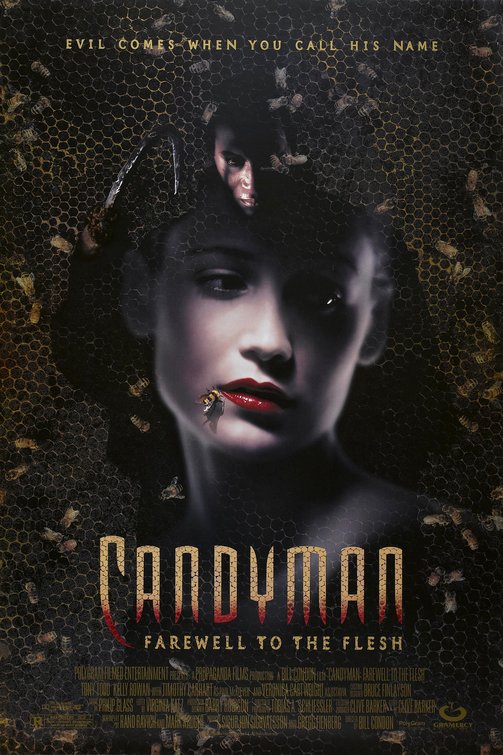
But with the demand of Hollywood, the film ended with the main focus on the supernatural. If it didn’t, there wouldn’t have been the opportunity for a sequel.

The Haunting of 1963 and 1999
According to a film review The Haunting of 1963 is considered to be one of the finest "ghost movies" it remains as one the most respected and influential entries in the annals of macabre cinema. In class we discussed this movie to be one of the Fantastic because of the competing outcomes of the supernatural and the natural. If you go off the film review the movie would be considered a horror film because it states it is a ghost movie. Ghosts are spirits that are explained by the supernatural and there is no competing themes in the story because they tell you that it is ghosts doing the haunting. This movie rely on light and shadow instead of blood and gore.
I like the 1999 version of the movie. It is more of a horror film than the 1963 version. This version does an excellent job with creating suspense and it does this through the atomsphere. I prefer watching movies in color than black and white. I get a better feeling the movie if it is done in color. This is one of the differences in the movie the way they create suspense. There are more intense senses in the second one.
The Haunting of 1963 really does not have a complex plot because we left to decide whether if it is a natural or supernatural outcome. In the 1999 version I feel there is a confirmation stage. Even though things are happening in Eleanor head the house begins to fight back and the others ouse guests becomes victims of the house madness. At the end of the movie we learn that the starnge events are happening because of the ghosts. The ghosts are revealed at the end of the movie.
I think the 1999 version is better depiction of a horror film than the original version.
Danitra
I like the 1999 version of the movie. It is more of a horror film than the 1963 version. This version does an excellent job with creating suspense and it does this through the atomsphere. I prefer watching movies in color than black and white. I get a better feeling the movie if it is done in color. This is one of the differences in the movie the way they create suspense. There are more intense senses in the second one.
The Haunting of 1963 really does not have a complex plot because we left to decide whether if it is a natural or supernatural outcome. In the 1999 version I feel there is a confirmation stage. Even though things are happening in Eleanor head the house begins to fight back and the others ouse guests becomes victims of the house madness. At the end of the movie we learn that the starnge events are happening because of the ghosts. The ghosts are revealed at the end of the movie.
I think the 1999 version is better depiction of a horror film than the original version.
Danitra
Exorcist The Beginning

I would define The Exorcist movie as a horror film according to Carrols account. A monster appears and it is fearsome, threatening, disgusting and most of all impure. Exorcism does not have many accounts of happening in the world which makes you believe that this could really happen. Some of the effects that happen in the movie do not really occur in real life people with this demonic procession. The monster is disgusting by the way she looks with scratches all over her face and also a very pale color. Her eyes glow in anger and her mouth is dark colored to show death and evil. I found that the use in color really showed when Sarah the doctor and then when she was under procession. In the role of the doctor she wore lightly colored clothes mostly whites and creams, but when she was under possession she was in bright colors such as red.
The monster was not revealed till the end of the movie and didn’t know who it was going to be until Sarah was shown. The storyline led you to believe they it could have been a couple of people who were the monsters bringing on havoc in the town. With these many assumptions I was unable to pinpoint the exact answer and in the end I was in shock to see who the real monster was. After the movie was over and I watched behind the scene features and they talked about how they used different techniques to diverge your thinking of who the real monster is. The director talked about how it took time to pick out the perfect person to fit the role of Sarah the doctor who in turn is the one under possession. He said he had to find a woman that was beautiful, nice and caring to get the audience to pay attention to her qualities and not that she is the monster. I would say they did a perfect job at picking the right character since I did not for one second believe it was Sarah. After the movie was over and the monster was revealed I realized all the hints that were said by the doctor that would give me reason to believe she was the monster. For example at the beginning of the movie when Father Merrin is talking to the doctor he asks her if she believes in evil spirits and she replies no I’m a doctor.
When watching this movie I noticed it follows the complex discovery plot. The onset is very short before the audience and characters know that a monster is among them with the strange deaths and missing people that are occurring. The discovery of the existence of the monster comes to shock to the people since it is a well known little boy named Joseph whose father owns the only hotel in the town. All the people of the town including Joseph’s father believe that’s he is possessed and causing the problems. They try to kill him, but Father Merrin gets him to the church before anyone can get to him. The confirmation stage happens in with the discovery scene because the main leader of the town gets all people to believe that Joseph is the monster. The people were wrong and I also thought wrong since it is in the church when we are confronted with Sarah and is under possession. Father Merin is able to remove the evil spirit with the help of Joseph , but in the end she dies.
To view the trailer click on http://www.apple.com/trailers/wb/exorcist_the_beginning/large.html
Thursday, May 17, 2007
The visual vs. the written word
Over the past few weeks we've watched several movies and read several stories that were supposed to be horrific. I can see the evidence in the movies, but I believe it is much harder to find horror via a story in a book. Is it that we are more visual beings, or is there something else that draws us in?
While watching movies, there are many things that can get us involved and more interested. There are many ways in which suspense is created and maintained. An example would be in the movie The Innocents. Ms. Giddens is first scared in the attic when she is looking for the children during a game of hide and seek. She sees a picture of the old valet and is suddenly "attacked" from behind by Miles who proceeds to choke her until Flora comes in. You have to wonder why this seemingly innocent boy would do such a thing. Our interest is further tweaked when Ms. Giddens goes to hide behind the curtain and sees Peter Quint in the window.
It is hard to evoke the same kind of emotion when reading a story in a book. After reading The Colour Out of Space and Green Tea, I could not reach any kind of feeling resembling horror. You get the basic premise of the story, but it's hard for anything to really get to your soul. You are not confronted with any kind of vision or sound or anything in that matter to supplement your reading. I think that some of these stories could have potential to be made horrific, if they were, say, transformed into a made for tv movie. I'm not asking for a blockbuster hit here, but a little something to grab my attention would be nice.
While watching movies, there are many things that can get us involved and more interested. There are many ways in which suspense is created and maintained. An example would be in the movie The Innocents. Ms. Giddens is first scared in the attic when she is looking for the children during a game of hide and seek. She sees a picture of the old valet and is suddenly "attacked" from behind by Miles who proceeds to choke her until Flora comes in. You have to wonder why this seemingly innocent boy would do such a thing. Our interest is further tweaked when Ms. Giddens goes to hide behind the curtain and sees Peter Quint in the window.
Another example comes from the movie The Haunting. When the door is shaking and banging and the house seems to be calling for Eleanor, we are put into a mode to be fearful. This fear is further heightened by the message on the wall asking Eleanor to help. These events help keep us involved and interested in what is going to happen next.
The music and sounds of the house also provide us with a way to be horrified. You can tell that something is going to happen when the music gets louder or the sound of someone's footsteps seems to get closer as in Cat People.It is hard to evoke the same kind of emotion when reading a story in a book. After reading The Colour Out of Space and Green Tea, I could not reach any kind of feeling resembling horror. You get the basic premise of the story, but it's hard for anything to really get to your soul. You are not confronted with any kind of vision or sound or anything in that matter to supplement your reading. I think that some of these stories could have potential to be made horrific, if they were, say, transformed into a made for tv movie. I'm not asking for a blockbuster hit here, but a little something to grab my attention would be nice.

Why can't pure fantastics be horrorifying?
Carroll mentions the fact that horror films have fantastic instances, mainly within the confirmation stage. The confirmation stage of horror films or plots seems to embrace fantastic hesitations. This meaning that there is a hesitation between the supernatural and the naturalistic explanation. Carroll then continues to say that “horror requires that at some point attempts at ordinary scientific explanations be abandoned in favor of a supernatural explanation.” This completely takes a pure fantastic plot to be outside of the horror genre. It is simply not defined as a horror according to Carroll. This is what I wish to focus on in more detail. I feel as though Carroll is possibly missing something with this statement.
To me I find two problems with this quote. One being that if the naturalistic explanation is revealed at the end, why is it that the horror is then removed from the movie? The movie may be classified a bit different, in that if a human is committing all the murders instead of a ghost, zombie, etc. The second problem I have with this quote is the idea that horror cannot come from a pure fantastic plot. The pure fantastic plot involves indetermination between the naturalistic and supernatural explanation throughout the entire film and by the end of the film you are still left wondering which it is. Why couldn’t a movie or book still be horrifying even if you do not find out the answer to all of the occurrences of the film or book? If a film leaves you suspended, why can’t you still be horrified? If a movie horrified you throughout, but in the end the natural is the real cause not the supernatural, does that then take away all the horror brought on by the film? A movie is still delivering fear. A movie could have all the same fear and such as if the movie had ended as Carroll thinks it should, with the supernatural being revealed as the culprit. A movie seems to be able to have all the same fear and such, even if you do not find out what the answer is.
While I do not enjoy movies or books that have what you may call a “cliff-hanger” ending, I feel as though there is still something to be said for these kind of movies. The ones that end almost without an ending, leaving it up to our imagination, is frustrating. But just because there is this unknown in the film does not mean that the film did not cause horror. While I did not find “The Haunting” to horrify me, I know others in the class may have been. I think the idea that you don’t know whether it’s all in Eleanor’s mind or if the house is in fact haunted, brings about even more fear if you will. If they would have ended it by affirming that it was in fact the supernatural, would that have brought about more fear than it does already? I simply don’t see how by ending it with the supernatural makes it more of a horror film than one that does not reveal the answer between the supernatural and naturalistic.
Another question that comes to mind is related to that of the movie “Suspiria.” In class we basically came to the conclusion that this movie did evoke fear and was in fact a horror film. Now if “Suspiria” had ended without revealing who the monster was, would that have made it evoke less fear or horror? I guess what I am basically arguing in full is the idea that you need to know and see the monster at all. Just as I think that the unknown can evoke fear, I feel as though a movie or book left unanswered can still evoke fear as well. You are simply left wonder, left to ponder. Do we really need an explanation in order to be horrified? I don’t think so.
To me I find two problems with this quote. One being that if the naturalistic explanation is revealed at the end, why is it that the horror is then removed from the movie? The movie may be classified a bit different, in that if a human is committing all the murders instead of a ghost, zombie, etc. The second problem I have with this quote is the idea that horror cannot come from a pure fantastic plot. The pure fantastic plot involves indetermination between the naturalistic and supernatural explanation throughout the entire film and by the end of the film you are still left wondering which it is. Why couldn’t a movie or book still be horrifying even if you do not find out the answer to all of the occurrences of the film or book? If a film leaves you suspended, why can’t you still be horrified? If a movie horrified you throughout, but in the end the natural is the real cause not the supernatural, does that then take away all the horror brought on by the film? A movie is still delivering fear. A movie could have all the same fear and such as if the movie had ended as Carroll thinks it should, with the supernatural being revealed as the culprit. A movie seems to be able to have all the same fear and such, even if you do not find out what the answer is.
While I do not enjoy movies or books that have what you may call a “cliff-hanger” ending, I feel as though there is still something to be said for these kind of movies. The ones that end almost without an ending, leaving it up to our imagination, is frustrating. But just because there is this unknown in the film does not mean that the film did not cause horror. While I did not find “The Haunting” to horrify me, I know others in the class may have been. I think the idea that you don’t know whether it’s all in Eleanor’s mind or if the house is in fact haunted, brings about even more fear if you will. If they would have ended it by affirming that it was in fact the supernatural, would that have brought about more fear than it does already? I simply don’t see how by ending it with the supernatural makes it more of a horror film than one that does not reveal the answer between the supernatural and naturalistic.
Another question that comes to mind is related to that of the movie “Suspiria.” In class we basically came to the conclusion that this movie did evoke fear and was in fact a horror film. Now if “Suspiria” had ended without revealing who the monster was, would that have made it evoke less fear or horror? I guess what I am basically arguing in full is the idea that you need to know and see the monster at all. Just as I think that the unknown can evoke fear, I feel as though a movie or book left unanswered can still evoke fear as well. You are simply left wonder, left to ponder. Do we really need an explanation in order to be horrified? I don’t think so.
Fannntastic!!
This week we have watched a few films that have been classified as "the fantastic." What is "the fantastic?" It is a type of film that is opposite that of a "horror" film, according to Carroll. If there is a monster, it is never shown, which usually means that it would be something of the supernatural sort. According to Carroll, an example of "horror" would be "The Bride of Frankenstein." The reason it is considered horror is because there are monsters present (Frankenstein and his bride). The have the characteristics of monsters, ugly, disgusting, seem to be out to kill and so on and we have identified them.
Now for "the fantastic." This genre is much different from that of "horror." To some, films may be horrorific, but to Carroll, they are not "horror." They are "the fantastic." We hear about the monster, but the thing is, we never actually come into contact with the monster. Which leads Carroll to believe that this monster is really supernatural. We never see it, we only hear about the things that it does or the people that it kills. A perfect example of this would have to be "The Haunting." This film is about a doctor who wants to find out about the Hill House and all of the murders that have occured there since the beginning of the house. He gets a select few people together to go to Hill House to see if they can witness a supernatural first hand. Over a span of a few days, the house starts to act up, it appears to breathe, and move and shake. One woman in particular feels as if this house has taken control over her. Remember, that we have not identified a monster, according to Carroll. The woman keeps saying that the house wants her, but nobody else understands, until the big wooden door in a bedroom looks as if it is breathing. That is when they finally realize that there really is something at work in that house, monster or supernatural, they don't know. At the end of the movie, the woman is leaving Hill House and as she is driving away, something takes the wheel of the car and starts to swerve. The car ends up hitting a tree and she dies before she can leave the gates. This film is a clear example of "the fantastic," to Carroll at least. Some may see it as a horror film because it is very frightening, but Carroll sees it different. We knew that there was something at work, creating all of these murders, but we never know what it was. Carroll doesn't consider the house as a monster, because it doesn't have the characteristics of one. The only conclusion that we can come to is that there is a supernatural force at work in the house causing all of the murders.
Now for "the fantastic." This genre is much different from that of "horror." To some, films may be horrorific, but to Carroll, they are not "horror." They are "the fantastic." We hear about the monster, but the thing is, we never actually come into contact with the monster. Which leads Carroll to believe that this monster is really supernatural. We never see it, we only hear about the things that it does or the people that it kills. A perfect example of this would have to be "The Haunting." This film is about a doctor who wants to find out about the Hill House and all of the murders that have occured there since the beginning of the house. He gets a select few people together to go to Hill House to see if they can witness a supernatural first hand. Over a span of a few days, the house starts to act up, it appears to breathe, and move and shake. One woman in particular feels as if this house has taken control over her. Remember, that we have not identified a monster, according to Carroll. The woman keeps saying that the house wants her, but nobody else understands, until the big wooden door in a bedroom looks as if it is breathing. That is when they finally realize that there really is something at work in that house, monster or supernatural, they don't know. At the end of the movie, the woman is leaving Hill House and as she is driving away, something takes the wheel of the car and starts to swerve. The car ends up hitting a tree and she dies before she can leave the gates. This film is a clear example of "the fantastic," to Carroll at least. Some may see it as a horror film because it is very frightening, but Carroll sees it different. We knew that there was something at work, creating all of these murders, but we never know what it was. Carroll doesn't consider the house as a monster, because it doesn't have the characteristics of one. The only conclusion that we can come to is that there is a supernatural force at work in the house causing all of the murders.
Subscribe to:
Posts (Atom)