Saturday, January 30, 2010

The Judge's House

Abby Murphy

Free Essay Topic

The Judge’s House was easily one of my favorite short stories for this course. It made for an extremely gripping read. It certainly falls under the horror drama because of the fact that horror is the primary emotion evoked in the reader throughout the duration of the story. There are three reasons why this tale of horror is so successful at evoking fear and disgust in the reader. The setting, choice of villain , and plot conclusion all lend a helping hand in instilling the reader with a sense of dread and horror.

The setting is very moody and dark from the get-go. My reasons, as a reader, for finding the setting creepy have much to do with the location of the house that the main character is choosing to live/study in. Malcolm Malcomson heads out to the middle of the country in order to study for a standardized mathematics test(Mathematical Tripos) in peace and quiet.

“ There was only one place which took his fancy, and it certainly satisfied his wildest ideas regarding quiet; in fact, quiet was not the proper word to apply to it- desolation was the only term conveying any suitable idea of its isolation. It was an old rambling, heavy–built house of the Jacobean style, with heavy gables and windows, unusually small, and set higher than was customary in such houses, and was surrounded with a high brick wall massively built. Indeed, on examination, it looked more like a fortified house than an ordinary dwelling. But all these things pleased Malcolmson .’’

The rooms in the house are also said to be big and draughty, and vermin are found living within the walls. The time of night, in addition to physical location, is another creepy factor in this story. Malcolm always studies late into the evening, sitting by the fireside, drinking tea. The nighttime is associated with vulnerability and reflection, and Malcolm experiences plenty of harassment in the night hours. Rats emerge from the walls to glare at Malcolm. One particularly large and evil looking rat sits on the high backed chair near the fireplace. This large rat stares at Malcolm with a look that appears familiar and menacing. Malcolm is also at a disadvantage because he is by himself when all of this is happening on a nightly basis. This solitude contributes greatly to the horror aspect of the short story. Human beings are social by nature, and we find solace if others experience the same things that we are going through. The fact that nobody is around when Malcolm needs it the most is somewhat terrifying from the reader’s perspective. There is also a negative energy associated with the house. Visitors to the house even feel the negative vibes coming off of it.

“She was evidently curious to see the inside of the house; and though manifestly so afraid of the ‘somethings’ that at the slightest sound she clutched on to Malcomson whom she never left for a moment, went over the whole place.’’

The hangman’s rope that the judge used, and a portrait of the judge is on display in the house. Knowing what the judge was responsible for doing and seeing the method of his cruelty surely had some psychological influence on the new resident.

The choice of villain for this story also contributes to the horror feel. The villain in this case was an ex-judge who was notorious for delivering harsh sentences to prisoners. There was a portrait overhanging the fireplace in the room Malcolm studied in:

“ It was of a judge dressed in robes of scarlet and ermine. His face was strong and merciless, evil, crafty, and vindictive, with a sensual mouth, hooked nose of ruddy colour, and shaped like the beak of a bird of prey. The rest of the face was of cadaverous colour. The eyes were of peculiar brilliance and with a terribly malignant expression. As he looked at them, Malcolmson grew cold, for he saw there the very counterpart of the eyes of a great rat.’’

In addition, other smaller rats would stay in the walls and make gnawing sounds on the wood. The giant rat was only scared away in one instance. Malcolm was tossing books at it one night, and it was only after a bible was thrown that the rat tried to stop harassing Malcolm. Later on in the story, the rat turns into the judge and attacks Malcolm. It’s hard to think of anything more horrifying than an evil entity that can transition between forms to mercilessly pursue its victim.

Lastly, the plot conclusion greatly contributed to the overall mood of horror for this short story. Malcolmson’s world is completely torn asunder when he steps foot in the judge’s house. For the longest time, he tries to make the connection between the rats and the portrait of the judge. The knowledge that is derived from the moment of discovery does not end up saving his life however. The large rat manages to transform into the judge and hangs Malcolm with the sinister rope that hangs from the bell. What makes the ending all the more scary is that the judge is able to continue his reign of terror long after his own death. It is still evident that the judge takes extreme pleasure in taking the life of others. To round off the whole story, no outsider knows what truly killed the student. After Malcolm managed to ring the alarm bell he was strangled by the judge. When villagers arrived, they found the student’s body hanging and probably assumed that is was a suicide. The icing on the cake was that the judge’s picture was intact with the judge smiling malignantly in the portrait. So the truth will never be known by outsiders. Doubt is even cast into the reader’s mind as to whether or not there was a judge and army of rats haunting the house. Maybe it was all a figment of Malcolm’s imagination. He was by himself after all. Those lonely, late nights, tea drinking, and hours of studying might have placed too much stress on his nervous system. One could argue that he cracked under the pressure that he was placing himself under; and that the story of the judge that the land owner told him just grew in his imagination until the story merged with his reality. The choice as to what really happened lies with the reader. I personally believe that Malcolm was really seeing what he thought he was seeing. What all readers can agree upon is that this is a definite horror story that won’t be quickly forgotten. This is truly Bram Stoker at his best.

Her Habits- A Saunter

Abby Murphy

Aspects of Horror and the Fantastic in Carmilla


Out of the all short stories that fall under the horror genre, one of the more renown works is Joseph Sheridan La Fanu’s, Carmilla. This short story contains everything that defines a classic horror tale. One can even extrapolate further to classify Carmilla as art-horror. It first helps to look at what defines a written work as art- horror.

Noel Carroll states that art-horror is, “ identified as narratives and/or images predicted on raising the affect or horror in audiences.” Carroll then goes on to stress that horror is primarily emotion based. Horror is evoked by two emotions-fear and disgust. Horror is induced in short stories and novels when something unnatural invades our natural world. This can be typified by the presence of a monster of some sort -vampire, werewolf, etc. Not only must there be a monster, the monster must make the main character(and consequently the audience) feel revolt and disgust. This entity tends to be a violation against nature and soon comes to represent the battle that exists between good and evil. The monster also tends to go against social boundaries and is associated with being impure and unclean. The typical human response to such a creature is physical agitation( tension, cringing, shuddering, recoiling, paralysis, nausea, and sometimes screaming). This physical agitation then gets translated into an emotional state(horror). As an audience, we might be aware that what we are reading is fictional, yet we easily come to view the protagonist under threat of the monster as someone worth identifying with. Art-horror tends to bring out biological responses that not only stem from the need for self-preservation, but the need for preservation of our fellow man too.

Carmilla, is a tale of that would have certainly been scandalous in the days of La Fanu. In a nutshell, it’s basically a story about a lesbian vampire that’s in the process of finding her next meal/lover. A girl by the name of Laura is one of the main characters. She lives in Styria with her father in a countryside castle. Little entertainment by way of visitors ever happens at her lonely, country abode. However, one day a foreign carriage crashes outside the front gates and we are introduced to Carmilla. Carmilla ends up staying at the castle for an extended period of time while her mother is off handling urgent business. Laura quickly notices that Carmilla looks an awful lot like the woman who visited her one night in her childhood nightmare. The encounter with the unknown woman was terrifying and painful, yet Laura ends up liking Carmilla off the bat. They find that they have much in common and Carmilla is of extremely beautiful countenance. Eventually, Laura begins to have strange visits in the night from something and village girls in the town are dying from an undetermined cause. The truth about Carmilla being a vampire later comes due to a friend of Laura’s father. Carmilla is then hunted down by the townspeople and staked through the heart.

Carmilla is an art-horror drama for numerous reasons. Carmilla’s character is one that causes fear, revolt, and disgust once the audience comes to realize who she is. Even before the moment of discovery, Carmilla was held in suspect just because of the mere fact that she looked like the woman who visited Laura in childhood. Laura would even feel a nervous chill when she was in Carmilla’s presence and noticed that whenever she felt at her weakest, Carmilla seemed stronger. This yo-yo effect had an emotional and physical toll on Laura. Her health suffered when she was around Carmilla. Once Carmilla’s identity was revealed, Laura’s emotional outlook then proceeded to one of total disgust, fear, and horror. Carmilla does not evoke disgust based on her appearance. She had strangely beautiful facial features and knew how to verbally charm Laura. Laura would feel overcome with passion, adoration, and love whenever she was in Carmilla’s presence. They established a very close and strong bond early on in the plot. However, as we’d soon come to find out, Carmilla was a wolf in sheep’s clothing. Part of the reason why her identity remained a secret for so long is because she was able to blend in with normal people. Likewise, human beings are naturally drawn to beautiful things( exterior and interior) and Carmilla was said to be striking by all those who met her. Carmilla was at the end of the day, a perfect predator. She was able to seductively lure her victim in willingly and was met with little resistance.

Carmilla was also an unnatural creature that was infringing on the natural world. Everything about her existence violated the laws of nature. Vampires are what Carroll refers to as a type of horror fusion. Vampires are both living and dead. They must slowly extinguish the life of others in order to keep themselves living. Not only just living, but living potentially for all eternity. Unless they are stopped that is. The natural order to things is that we must age and die. Vampires go against the laws of nature by stealing the life of those that abide by natural order. Carmilla was also much worse in some ways than the typical vampire because she violated the social norms of the time. Lesbian love was frowned upon, and made her character all the more thematically forbidding. Parallels are drawn between vampires and a sexually charged atmosphere to begin with, but a lesbian vampire only enhances this image further. This is a violation against the normal sexual tendencies expected for a young woman. Sexual perversion is oftentimes associated with impurity and uncleanness. Again impurity and uncleanness, no matter the source, is part of what makes up the horror genre.

Additionally, Carmilla is a story that falls under the classification of fantastic/marvelous. The fantastic/marvelous is classified by thinking initially that there are naturalistic explanations for abnormal incidents, but towards the end of a plot there’s the conclusion that the incidents are supernatural in origin. Carmilla is not thought to be the cause of Laura’s ailments, childhood haunting, and the reason why townspeople are dying. These are all explained away by saying that there is disease and an overactive imagination to blame. The resolution of the story verifies that there is, however, a supernatural force to blame for all the town and Laura’s hardships.

In conclusion, the Carmilla tale not only typifies the art-horror and fantastic genre, it exceeds expectations by additionally being quite provocative, weird, and suspenseful. It has no true explanation at the end for why Carmilla singles out her particular victim, and it leaves open the fact that there might be are other vampires still roaming the country(Carmilla’s family, servants, ex-lovers, etc.) Horror therefore has a chance to live on in the minds of those readers most susceptible to their own imagination. The feeling of cosmic fear is perfectly maintained throughout the story and the conclusion still leaves one feeling suspended between two emotions. Relief that Carmilla met her demise, but questioning uncertainty that the story might not truly be over for long. Carmilla may be deceased, but she will live on in the imaginations of readers for years to come, making this the ultimate art-horror story.
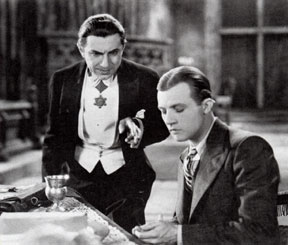
“Yes, Atmosphere was my style”

While in London, the class took a trip to the Tate British Museum to compare the sublime works of Turner to the story of Dracula. The art of the sublime can be described as awe-inspiring, savage grandeur, a natural world unmastered by man, evidence of the power of God. Turner’s works have been described as fantastic puzzles that stirringly and truthfully measure the moods of nature. Turner also does a great job at portraying the vulnerability of humans amongst the sublime nature of the natural world. The humans in his pictures are often very small with little detail and are an insignificant part of the painting compared to the vast landscapes and their intricate details. Turner plays with the effects of light in his paintings creating a feeling of spirituality rather than recreating precise details of the landscapes as they are seen by the naked eye.

In the last room of the exhibit there was a direct quote from Turner on the wall, “yes, atmosphere is my style”. A key component to the book Dracula is the way Stoker sets the mood by describing the eerie scenery, setting one up for the story to come. In a way Stoker also masters the sublime in his writing. While Harker is on his way to Dracula’s castle writing in his journal he describes the landscapes around him. Harker has a feeling of being very small and not in control of anything around him. When the storm is rolling in and Dracula’s boat is coming into harbor, Stoker describes the scene in great detail creating fear by merely describing the natural events of nature. Turners painting, Snowstorm, was in my mind the perfect visual of the storm. There is uncertainty as to what is happening in the painting, it looks like nature is taking over control of the boat. Stoker also created uncertainty in the docking of the boat, leaving what was happening on board a mystery until the following chapter.

I feel Turner’s quote could be applied to both himself and the writings of Stoker. They both use the uncertainty of nature to control the feelings of the viewer or reader. Stoker’s descriptions of the landscapes seem to very similar to the visual representations of Turner’s. Both create a feeling of smallness and lack clarity in a way that it leaves you to fill in what is unknown. I feel that Turner could have been Stoker’s muse in the descriptions of nature in Dracula.

The Paradox of Horror

While reviewing Freud and his psychoanalytical theories at the beginning of yet another psychology class I started to see similarities between his views on dreams and Carroll’s Paradox of Horror. According to Freud, a person’s dreams are representative of the unfulfilled or repressed wants, needs, and anxieties of the person. They present themselves to us in our unconscious state, sometimes in a symbolic way as to not disturb the person. Horror films like nightmares can be attractive and repellent to the viewer/dreamer in that we are observing our repressed anxieties and fears from a safe viewing distance. We are confronting our fears while staying safe on our couch, or our unconscious mind. By viewing our fears we feel that we have gained control over them and can now put them into a rational perspective. Our fears felt towards what we find scary, be it aliens, serial killer, or monsters, and may derive from a deeper fear from our repressed anxiety and/or psychosexual desires. But like all of Freud’s theories this is untestable, and not all monsters and fears are repressed anxieties or sexual desires.

Moving away from Freud, I believe that horror genre has been attractive to the generations for so long because of the curiosity it elicits and attention it commands. While watching a scary movie you may find yourself scared to death, covering your eyes because you feel you cannot handle what comes next. However I know as I am doing this, I am usually peaking through my fingers because I HAVE to know what comes next. I am curious to see if the jock can out run Michael Myers, or how a person will make it out of Jigsaw’s latest torture device. While watching The Strangers like April had mentioned in a previous blog post, everyone in my living room had comments to make at Liv Tyler as she is screaming in terror giving away her location to the bad guys, saying things like ‘why would you do that’ ‘you’re stupid, you deserve to found’. It is easy to say what we would do when watching someone else in that situation. It gives us a feeling of superiority over those in the movie. We feel that by watching these movies we will know what to do in a situation like the ones the characters are faced with.

Finally, it comes down to what is horror? It is different for every person, but I feel there are certain themes to what constitutes as a good scare. First, is that of the supernatural. This includes things such as alien invasions like the movie War of the Worlds, or ghosts like in the latest hit Paranormal Activity. Finally that or the undead, this is where Dracula and Carmilla fit in. The second theme is psychological, where things seem to be playing tricks with your mind, like plot is more like a puzzle. I feel Steven King books fit into this theme. Finally there is the biological scare, or scare from nature. More recently there have been movies where science has gone wrong and humanity suffers as a result, examples including I am Legend, and The Happening. No matter the type of scare that will jolt your nervous system horror films allow one to confront their fears while in a safe secure environment.

Thursday, January 28, 2010

The Burial of the Rats


The Burial of the Rats is a story that Stoker wrote while on his honeymoon with his wife in Paris. The story takes place in the “dust heaps” of Paris, which seems to be some sort of junk yard where soldiers from the French Revolution convene. The man in the story wanders around exploring Paris and comes upon this village of dust heaps, soldiers, and an old woman. The old woman tells him a story about going into the sewer and finding rats that eat people, and he realizes that her plan is to feed him to the rats and steal his expensive rings.
The man leaps for escape, and a large chase ensues. These people were very set on capturing him for some reason. In the end, the man finds help from some police men and they go in search of the thieves who had been trying to murder him. They find the old woman dead; her bones picked clean by the rats. The rats had also killed one of the thieves.
The rats in the story fit the bill of the horror monster because they are both terrifying and disgusting. Rats do not normally eat people unless they are threatened or starving and desperate. This story would be a fantastic marvelous story because the flesh-eating rats were real and there was no supernatural explanation given for their disgustingly abnormal eating habits!

The "Fantastic" stories: Dominick’s Bargain and The White Cat of Drumgunnoil

“The Fantastic”, a literary genre as defined by Tzvetan Todorov, describes literary works in which the characters’ experience events that can have both scientific and supernatural explanations. It is often left to the reader to decide whether the explanation is natural or supernatural. Tordorov states that, “…the text must oblige the reader to consider the world of the characters as a world of living persons and hesitate between a natural and a supernatural explanation of the events described.” J.S. Le Fanu’s Sir Dominick’s Bargain and The White Cat of Drumgunnoil are both stories which leave the reader to decide between natural or supernatural explanations and can therefore be categorized as literature of “The Fantastic” genre.

Sir Dominick’s Bargain is the story of Sir Dominick, a man who, in an immense state of desperation, made a deal with the devil to have unlimited riches for seven years. At the end of these seven years he would then serve the “Evil One”. The deal is taken and at the end of the seven years, the Evil One comes to claim his end of the deal. When Sir Dominick attempts to evade him, the Evil One then smashes Sir Dominick’s head against a wall leaving a blood stain that cannot be removed.

The tale of Sir Dominick is told by a seventy year old man sitting near the stained wall. Belief in the story of Sir Dominick relies solely on the credibility of the seventy year old man who did not experience it first hand, but was told by his grandfather. The reader oscillates between the natural and supernatural when choosing to believe the old man’s story or pass it off as misinformation. It is said of the stain on the wall that, “That’s a splash of brains and blood. It’s there this hundred years; and it will never leave while the wall stands.” The reader is then forced to decide whether the blood stain is ingrained in the rock wall by some scientific physical means, or whether it is a supernatural mark that will truly never disappear. The presence these real and supernatural explanations are criteria which categorize this story in “The Fantastic” genre.

The White Cat of Drumgunnoil is the short story of a family which is plagued by many deaths. In the days preceding their death, a person encounters a white cat with green eyes which walks near their feet growling. It is believed by the family and other members of the community that this white cat is an omen of death and appears when the end of life is imminent. “It is the messenger simply of death. And it’s taking shape of a cat-the coldest, and they say, the most vindictive of brutes-is indicative of the spirit of its visits.”

When reading of these feline encounters, the reader is forced to choose between natural and supernatural explanations of events. It may be a mere coincidence that the cat appears before the death of an individual, or the cat may truly be the embodiment of a death omen. Another conclusion that a reader can draw is that the cat is infected with a sickness which is then contracted by the family member upon encountering the cat. The reader is left to theorize as they please or believe the theories of the characters. There is no final revelation that the cat in fact is a supernatural being. This oscillation between natural and supernatural explanations of events categorizes The White Cat of Drumgunnoil as “Fantastic” literature.

Monday, January 25, 2010

Why? Why? Why?: The Paradox of Horror

Why are some people so naturally drawn to such a spectacle that is otherwise so displeasing to our senses? The horror genre is one of these things to which we seem morbidly and despicably drawn. Theoretically the horror media should not exist. In theory the following scenario should unfold: A horror book or movie comes out, the public is repulsed by the idea of what the book or movie is about, it receives no fan base, and fades out without so much as a single reader or viewer. However, this does not happen, this class of media maintains a relatively large fan base and has movies such as The Exorcist that grosses nearly $750,000,000. As we can see not only does this genre have a fan base but it flourishes.

A philosopher that tries to explain this phenomenon is H.P. Lovecraft. Lovecraft's theory is that in our psychology we are somehow hardwired to enjoy horror. However, to be enabled to enjoy it you must be sensible to unknown forces and beings. While we know that in reality these beings are not real, we have to have something in our minds that tell us if only for a second that there is a possibility that these things could be real. While Lovecraft has his theory on why we enjoy horror, I prefer to adopt Burke's theory on the sublime and use it to describe the paradox of horror. Burke's theory on the sublime is that we can find something that is threatening beautiful/fascinating because we can gaze at it from afar and not be immediately in danger because of it. For example: if we go outside and look out into the sky and see a tornado off in the distance we are compelled to look in awe at it, but if that same tornado becomes too close and begins to cause destruction around us we immediately forget the beauty of the tornado and hit fear mode. Like storms I feel that we are drawn to horror stories for the same reason. We are instinctively intrigued by these things that are deemed undesirable. As long as we can stay well away from harm, we maintain a fascination with it.
In conclusion, while we do not know for sure why the exact reason we find horror so fascinating, something about us is simply drawn to the rather undesirable spectacle. Simply the idea of horror dumbfounds the mind, but we cannot get enough of it. While there are some theories to explain why we like such a thing, we may never fully understand why, but who cares! This is something that people enjoy and one day we may know the real reason why are drawn to this type of media, but until then I say "Bring on the Horror!".

Sunday, January 24, 2010

An Authentic Narrative of a Haunted House

“Neither have I made any inquiries respecting either the antecedents or subsequent history of the house in which we made so disturbed a sojourn. I was content with what I knew, and have here related as clearly as I could, and I think it a very pretty puzzle as it stands.”

These are the final words in LaFanu’s story An Authentic Narrative of a Haunted House. This story reads much different than any of the other stories we read in that he merely states the events as they happened. LaFanu describes the occurrences of the ‘ghosts’ or what some servants believed to be robbers. He describes all oddities witnessed by the different occupants of the house as they stated and adds nothing, no thought as to what is behind the odd events that have been happening since the family has moved into the ocean front house. Events ranged from a flickering candle with an unexplained shadow, numerous sightings of unfamiliar beings, and the reoccurring presence of a very sickly looking woman often seen searching around both inside and outside the house. All events lead up to the discovery of a human jaw in the backyard of the house.

The family soon after moves from the house and the conclusion of the story is that stated above. All events of the story are left unexplained, the reader is never told whether all events were supernatural, or actually that of robbers. Also the discovery of the human remains was never concluded, we are not told who they belong too or how they got there. LaFanu masters the art of horror in this story by playing on the reader’s imagination. By leaving everything up to debate, the story is in a sense as terrifying as the reader wishes it to be. The story is ‘a very pretty puzzle as it stands’.

Paradox of Horror

The Paradox of Horror is very contradictory to Freudian ego defense mechanisms, which are said to protect our mind and self from anxiety and provide a shelter from a situation where originally someone could not cope. Situations like getting robbed, kidnapped, scared etc...our body naturally has this mechanism to help us get through these traumatic situations and experiences...So why would we PUT ourselves in a situation knowing it is going to terrify us?...because of that feeling...that rush our body goes through.

I recently watched paranormal activity with some friends and it gave me the most nauseating feeling and made we start thinking about why I put myself through this. I have watched several horror films but this one has been the creepiest. I believe it is because it can really happen and that you hear stories all the time about people who have demons or ghosts in their house. I find this type of "horror" film scarier than those made with all gore and killings because it is surreal...you can not see or explain exactly what is going on and the thrill of trying to figure out is captivating. It gives our body an adrenaline rush which we enjoy. I am sure that is not the only reason people watch these kinds of movies but that would be my best guess. We enjoy the rush. It is similar to wanting to sky dive...why in the world would anyone want to jump out of a plane....sounds crazy to me... but I am the type of person who enjoys that rush and would do something like that... just like watching a horror movie...I want to be freighted enough to jump, hide behind the covers, try to look away...but can't...My defense mechanisms are working at their best to calm me down and that is what drives me to watch these type of movies.

Also, people do not like the unknown so we try and analyze it and piece things together to figure out exactly what is going on. Even in the movie I watched, the boyfriend, disregarded all the warnings from the psychic, did exactly what he shouldn't to try and aggravate the entity. He went as far as getting the Ouija board and trying to communicate. Not to mention, I was enjoying the fact that he was doing everything he was told not to because I wanted to see the entity and what it was capable of. I feel like if I was in that same situation...I would have done the same thing. He, also, was trying to figure out the unknown in his own way, which is exactly what we try to do while we watch any kind of movies. We all put ourselves in the character’s situation try and learn what to do and what not to do in every situation.

Saturday, January 23, 2010

Dracula and the Paradox of Horror

Dracula is a really great example to Noel Carroll’s idea of the “paradox of horror.” The “paradox of horror” states what is horror is and why people like it. One of the first items that Carroll mentions on his ideas of the paradox of horror is that this paradox comes from the emotional responses to fictional characters, which generate a paradox and that allows people to respond to what is going on. People generally don’t look for things repulsive or anything that tends to harm them. This is why they turn to books and movies. They do this because it’s other people, not themselves, that are being harmed. Also, audiences start to use the illusionist theory, which states that people think that the story could happen, and because of this people forget what they are watching isn’t real.


There are many parts to the idea of Carroll’s paradox of horror and what makes a horror story art-horror. One of the first aspects of a horror story is that it has to have a monster. In the story of Dracula, Dracula would be considered the monster. The monster is said to be disgusting! The monster has to have characteristics that are not of the norm. These characteristics of the monster include that the monster has to be fearful, threatening, and disgusting to both the natural and social order. Dracula, the character, fits all of these characteristics. The character of Dracula is feared throughout the story of Dracula. These characteristics include Dracula’s looks (dead/undead), his teeth, blood-sucking, transformation, the crawling on the outside walls of the castle, the place where he lives, and the eerie control he had on people. All these aspects made the story horrifying and follows the idea of Carroll’s paradox of horror closely. Dracula is also seen as a threat, because he can take the lives of individuals by biting them and he can even control the mind‘s of people, like he did with Mina near the end of the book.


Carroll also mentions that there are several types of monsters in the horror genre. There are four types of monsters and the book Dracula uses three of them. The first category of being a monster is fission. Fission is “the divid[ing] of characters in time…Here the characters become symbols for categorically distinct or opposed elements” (Carroll 47). In Dracula, Dracula is able to change into many different species and elements. He can change into a bat, a wolf, and mist. He is able to do these things at will, because the gypsies gave him that power.


Another category that the story Dracula has is fusion. Fusion, “contradictory elements are fused or condensed or superimposed in one unified spatiotemporal being whose identity is homogeneous” (Carroll 46), plays a key role in the story Dracula by making the characters think on the idea of Dracula being dead or undead. This is a key concept for the book, because the whole book is trying to determine if Dracula is alive or undead. They have to decide if it is possible that a dead individual can come back to life. The story is all about this concept and this is the whole mystery throughout the book. Finally, the last category that Carroll mentions is masses, which is a large amount of something causing havoc for the world. Some great examples of this would be tons of birds or spiders attacking the world. In Dracula, there is one scene in the book where there is a mass of something terrorizing the characters. The mass was of thousands of rats coming out of Dracula’s house in London, supposedly 138 Piccadilly Circus. Also, if there was a mass of vampires, which could have happened if they didn’t stake Dracula and Lucy, the world would be in chaos and full with vampires.


Photobucket

Dracula also has a very horrifying plot, which Carroll in his "paradox of horror" calls a complex discovery plot. The first part of a complex discovery plot is onset. The onset of a complex discovery plot starts in the beginning of the story where the characters don’t know that there is a “monster out there“, but the audience knows. After the onset occurs one character or characters discover that there is something out of the norm going on (a monster causing a problem). In the story Dracula, Van Helsing discovers that there is a problem going on in London and figures out there are vampires in the world (Lucy and Dracula). The next stage is confirmation, which is where a character tries to confirm their beliefs on others, but some of the characters find the idea of a monster skeptical. Van Helsing, in Dracula, tries to confirm that Lucy is a vampire and that vampires exist. Dr. Sewards, Quincey, and Arthur are skeptical at first because they don’t believe that Lucy could be a vampire (there is no such things as vampires). The next step in the complex discovery plot is confronting the monster. Van Helsing takes the three men who were skeptical to “vampire” Lucy. He was right and because he was, he had to confront Lucy. The four men had to stake her, so she would not be apart of the undead. After confronting this monster they decided that they would do everything they could to make sure that what happened to Lucy, vampirism, never happens again. This leads to all the characters searching for Dracula. The men, with the help of the Harkers, were able to defeat Dracula in the end by staking him. They knew if they staked him it would bring social order back into the world.


In the end, the story of Dracula fits Carroll’s idea of “paradox of horror” very well. The characters, plot, and disgust in Dracula will never be forgotten, but will be remembered because the book is well written, has a great monster, and is a great example of art-horror.

The Rambling Man

The thing I found the most interesting while in London and Dublin that related to the class was was walking around the streets that these two authors would have journeyed through daily. The Victorian-Gothic architecture in London drew me in right away, when you take the time to look at the buildings in both of these two cities, although they have changed in the last 100+ years, you begin to get a sense of the settings the authors had in mind when writing their stories. Before my visit to London, I read Dracula, when reading the book I began to envision a setting much different from what it was intended. The setting I created was a few gigantic buildings among a seemingly simple town of small building that had thatched straw roofs, much like that seen at the Globe Theater. After studying abroad I realize may time line was far off.
The most influential part of the journeys around town we partook in was the walk down Picadilly Street looking for the house that Count Dracula "resided" in while in London. From this spot, the Count planned his invasion of London and from London to the entire world. Picadilly is consitered to be the workers part of London and I think this busy street begins to give you a real feel for how things used to be in the late nineteenth early twentieth century, apart from the Hard Rock Cafe and all of the embassies located here. Within the first block of the street you see tall buildings that seem to always be connected. The amazing thing about this street is that, to me at least, it seems to have had little modification to the exterior of the buildings which preserves the style of the buildings which helped me to form a better setting for the book.
In conclusion reading a book like Dracula can bring one to a journey to London, but a trip to London, where you are able to visually observe the setting of the book. When one is able to put themselves physically into the setting of the book it brings a new aspect to the book when reading it.

Thursday, January 21, 2010

The Paradox of Horror

Last night, a few friends and I had a dinner party at Lindsey's house which ended with us watching a "scary movie", The Strangers. This movie got me thinking about the paradox of horror, and why we actually watch these scary movies. I, for one, do not watch scary movies all that often. I don't enjoy having to go home and try to fall asleep without thinking of ghosts, demons, or aliens attacking me at night.
The movie The Strangers does not involve supernatural villains, but villians who are other humans. The villians, for no apparent reason, attack a couple living in the middle of the woods. Watching this movie made me realize that I don't find horror movies scary unless the villians are supernatural, and this brings me to the paradox of horror.
I think that people watch horror movies for many different reasons, because everyone is different. It is hard to pin down one answer that will encompass everyone's behavior and motivation for enjoying the horror genre. My best guess, which involves my own personal motivation, is that people subject themselves to horror because we want to experience new situations. The situations in horror movies are sometimes things that could happen to us in real life and sometimes things that are unlikely to happen or that people have only claimed to have happened. Watching the horror movies helps us be prepared to experience new situations. We can run through what we would have done, had we been the character in the movie. While the six of us were watching The Strangers last night, we had a running commentary involving things like, "Why doesn't she just give up and let them kill her?" and "She should just shoot them, she was right there!" It's almost like playing a video game.
In psychology, we learn about people that we deem "sensation seekers". This type of person doesn't have very high arousal in the average state. They are always looking for new experiences that will increase their arousal. They're characterized by risk taking, spontaneity, and being outgoing. I would predict that another motivation for enjoying horror is that some people use it to increase their arousal! Those that are low in sensation seeking might still enjoy scary movies, but they may enjoy it for other reasons, such as practicing for a zombie invasion!

Tuesday, January 19, 2010

The Conundrum of Horror

The “Paradox of Horror” as spoken of by Noel Carroll and discussed throughout this blog simply asks “Why do we enjoy reading and viewing ‘horrible’ subject matter, when in reality we do not wish to encounter such things?” While studying in London and Dublin our class had the unique opportunity to discuss many different theories amongst ourselves (affirmed horror enthusiasts). There are of course many answers to this question. I would like to present three of my own to share and discuss.

First, we enjoy horror novels, movies, etc. because it is one of the only mediums by which we can experience grave and gory situations without feeling guilty or remorseful. For example, when one drives past a terrible accident on the interstate they cannot help but stare at the shattered remains of the vehicles and attempt to view as much as possible. However, after passing the site, feelings of guilt for having stared and empathy for those involved arise. Yet, we seem to have no problem viewing a far worse accident in a movie theater. Murder, decapitation, even animal cruelties are all things we have read and seen in the horror genre, but would be discomforted to speak of in any real life context. It allows one to say “If it’s fake, it’s ok”. Because, isn’t it?

Secondly, the horror genre is one of the few ways to experience fear with no threat of real danger. It is our jack in the box to wind and wind again, then put away whenever we desire. While fear is a very commonly felt emotion (e.g. fear of failure or loss), “horrific” fear in real life comes with the threat of imminent danger. Through horror films and books one can easily be transported to the most dangerous of places in the safety of their own home. The human tendency to desire the things of less abundance may also be applied to this horrific type of fear. It is enticing to us because we do not feel it very often. The horror genre provides the ideal and safe venue to indulge this desire.

Finally, we enjoy horror because we like to see how other human beings will react in horrific situations. We then compare these reactions to how we ourselves would have reacted. “Don’t go in there!!!!.........(Shaking head) I told her not to go in there.” We are often left wondering what we would do in the same terrible situation. Because we do not often have to make “life or death” choices, to watch others do so is appealing. It is tempting to feel as though we are actually learning how to survive these horrific situations by reading and watching others experiences. While we may never have to drive a stake through a vampire, one may feel as though they are more prepared to escape a desolate cabin after watching a few horror flicks. Viewing the reactions of others in horrific situations causes us to explore and question ourselves. We are again drawn to horror by placing ourselves in horror.

Comparing Dracula and J.M.W. Turner's Paintings

One of the most interesting parts of the trip was the visit to the Tate British Museum. On this trip, the class got to compare J.M.W. Turner’s work of the sublime with the story of Dracula. Before going to the museum, Dr. Langguth asked the class to consider the idea that Bram Stoker used Turner’s works to make some of the descriptive scenes throughout Dracula.

There were many parts of Dracula that resembled scenes from Turner’s works. One of the first paintings that resembled a scene from Dracula was Snowstorm (1842). This painting resembles one of the boat storm scenes that happens in Dracula. It resembles Dracula in several ways. The viewpoint of the storm narrowing into where the boat is in the storm could remind a viewer of a “red” eye looking towards the boat. Also, the eeriness of the storm in the paintings looks like what Stoker wrote in his book. The scenery (the eeriness), which consisted of darkness, mist, and danger of the waves, makes the book visual and descriptive. The colors used were very fascinating as well. The black used in the painting showed the pure darkness of the storm. Also, the blend of the white and black shows that the movement of the storm and the use of gray helps the viewer visualize that there is mist or even a storm going on. Because of these effects that Turner used in his paintings, it was easy to visualize the story of Dracula and make it come to life.

Photobucket

Another Turner painting that resembled the ship scene in Dracula was a painting entitled Fishing Boats Bringing a Disabled Ship into Port Ruysdael (1844). One of the first features that will catch the viewer’s eyes is the landscape of the painting. The landscape that is produced in this painting is of a storm in the ocean with ships in it. The ocean, which is a part of the storm, is controlling these little ships. The ocean is putting these ships in danger and it seems like there is nothing these ships can do because the waves are to destructive because of the wind. This could remind a viewer of the storm that occurred in Dracula. The scene in Dracula says, “One of the greatest and suddenest storms on record has just been experienced here….The waves rose in growing fury, each overtopping its fellow, till in a very few minutes the lately glassy sea was roaring and devouring monster” (Stoker 85, 87). Also, the features of “white-crested waves” and the mist, which the captain of the boat in Dracula talks about in his notes, used in the painting makes the story of Dracula seem more real and visual. It seems as if Stoker could have used this particular scene to talk about the dangers of the storm that is written about in Dracula.

Photobucket

There is also a Turner painting that is very comparable to the scene in Dracula where Mina pastes a story from a newspaper called The Dailygraph about a sunset that occurred before the storm . The painting is called Scarlet Sunset (1832). This scene seems like a perfect resemblance to what the newspaper said about the sunset. The book says, “Before the sun dipped below the black mass of Kettleness, standing boldly athwart the western sky, its downward way was marked by myriad clouds of every sunset-colour - flame, purple, pink, green, violet, and all tints of gold….” (Stoker 86). The colors used in Dracula are the same as those in the painting by Turner. The clouds are red (flame), purple, there are some that are pink, green, violet, and some that are gold. Because there is such a strong resemblance, it can be inferred that Stoker most likely used Turner’s work to detail his stories.

Photobucket

Finally, another painting that caught my eye was not in the Turner exhibit gallery, but in the regular gallery at the Tate, it was a comparison of a Turner painting, Sunrise, a Castle on a Bay: `Solitude‘ (circa 1940-5), and another painter named Claude Gellée who painted The Enchanted Castle (1664). The paintings are very similar, but Turner made his more eerie. It is believed that Turner used Gellée’s painting to produce his own picture of the sublime. Both pictures display a castle, which seems like a “Transylvanian” or Dracula owned castle. Gellée’s picture seems very colorful and looks towards a happy surrounding, but the same cannot be said about Turner’s similar painting. Turner’s painting looks exactly like a scene portrayed in Dracula. The scene is of a castle hiding in the mist. The trees and landscape make the painting more horrifying and eerie. When looking at the picture, it would probably make a reader think of John Harker approaching Dracula’s estate and him being afraid of going there. With this painting, a viewer can look through the eyes of Harker and what he saw instead of hearing him talk about it. For most people it is easier to see things than to hear about them. Thanks to Turner, a viewer is able to see and picture things that Stoker would have drawn if he could have drawn it in his writings.

Photobucket

Photobucket

In the end, it can be concluded that Stoker could have used Turner’s paintings to make the visual scenes that are produced in Dracula. The scenery, landscapes, and colors that Turner used brought the story of Dracula to life If Stoker was asked to use illustrations in the book, he would probably have used the paintings of Turner to make his story come to life.

Friday, January 15, 2010

Johnathan Barry, Irish painter of the sublime!

While in the Writer's Museum in Dublin, a few of us came upon some interesting artwork by an Irish man, Johnathan Barry, who paints scenes from literature. Some of his works that caught my eye were prints from Alice in Wonderland and Peter Pan, but some of his other prints were less carefree and childish. There were many prints from stories that were aimed more at adults, such as The Lord of the Rings, and even Dracula.

Seeing these paintings from a man born and raised in Dublin made me think about what we were studying, namely the atmosphere and settings that inspired Bram Stoker and Sheridan LeFanu. While it is quite interesting to see the things that inspired the horror writers of the late 19th century, it made me realize that Stoker and LeFanu have inspired many people who have come after them, Johnathan Barry possibly being one of them.

Barry has prints that depict scenes from both Carmilla by LeFanu (below, right) and Dracula by Stoker (below, left). He also has artwork, such as that depicting Mount Doom from the Lord of the Rings exploding, which is obviously influenced by the sublime painters like Turner that we saw in the Tate Gallery in London. It is pretty safe to say that Barry was influenced by Stoker and LeFanu as is shown through his artwork. It is interesting to not only understand who and what influenced our Irish and English horror writers, but who and what they influenced as well (insert Twilight reference here...).

Monday, December 21, 2009

Highgate Cemetery Videos


This morning I discovered some fascinating YouTube videos featuring one of our destinations for next week, Highgate Cemetery. The cemetery is believed by many Dracula scholars to have been Stoker's main inspiration for the one in which the newly undead Lucy Westenra was entombed, and where she is subsequently confronted and destroyed by her former suitors and Van Helsing. Additionally, there was a period of time in the 1970s during which rumors were spread of an actual vampire running about in Highgate. The videos are actually quite spooky, so consider yourself forewarned. You can read more about Highgate cemetery and its famous vampire by following the links posted above. Click on the highlighted text to view the videos.

Saturday, December 19, 2009

Plot and the Emotions


A short follow-up to yesterday's thoughts on Dracula. Are you caught-up in the story yet? What is the "hook" that pulls us into the story and makes us want to learn more? Carroll's "erotetic" (question and answer) understanding of plot maintains that questions are posed early in the novel that we expect to be answered later on. In horror stories, the question at the heart of the narrative is often "is the supernatural being or event proposed by the story going to turn out to be real?". Such stories can be thought of as dramatizations of a conflict between a "supernatural" and a "naturalistic" interpretation of the story. If the narrative leaves us suspended between the two, the genre is called, following Tzveton Todorov, "the fantastic." An example would be The Turn of the Screw by Henry James, in which we cannot be quite sure whether there was an actual haunting/possession taking place or simply the imaginings of an unhinged mind. In "pure" horror tales, the monster ends up being real. Todorov calls that type of story the "fantastic-marvelous", and the type in which the purported supernatural event or being is explained naturalistically the "fantastic-uncanny." The "fantastic" itself offers no resolution at all. Do you think that it would be possible to interpret Dracula as an instance of the fantastic? That is, is there any evidence that Count Dracula was in fact not a vampire? Compare the narrative structure of Dracula with Arthur Conan Doyle's The Hound of the Baskerville's, a Sherlock Holmes story in which an allegedly supernatural being (a spectral dog) ends up being explained by Holmes as a murderer's plot. By the way, Doyle and Stoker knew one another, and there is a Holmes story that seems to have been based on Dracula ("The Illustrious Client"). We may look in on Holmes and his faithful companion Dr. Watson while in London.

Friday, December 18, 2009


Some Preliminary Thoughts on Bram Stoker’s Dracula and the Horror Genre

 Dracula was published in 1897, and was written by Bram Stoker. Stoker was born in Dublin but spent much of his life in London. We will, of course, be visiting many Stoker sites in both cities on our upcoming trip. See the above links for more information on Stoker's life and works.

  Along with Mary Shelley’s Frankenstein (1817) and Robert Louis Stevenson’s Dr. Jekyll and Mr. Hyde, Dracula is one of the most influential horror novels of all time. But what is horror, and, perhaps more to the point, what accounts for its longevity as a genre? What is the aesthetic appeal of a genre so steeped in mayhem, supernatural terror, gruesome death and dismemberment, etc.? The second question that I have raised here is referred to by Carroll as the “paradox of horror”, and is one of the central questions of our course. We will return to it later. The first question has been addressed in a preliminary way in my last post, in that Carroll supplies us with a definition of the horror genre that highlights the centrality of monsters and the emotion of “art-horror.” For Carroll, a work falls into the horror category if, and only if, it features a monster that is both fearsome and disgusting. A “monster” is any entity that is taken not to exist by contemporary science. Some monsters, like those in Jurassic Park once existed but no longer do, others have never existed. As we have seen, not all monsters horrify us, and so not all fictions containing monsters are works of horror. Star Wars, as Carroll points out, is full of monsters but is quite obviously not a horror film.


Dracula as a Paradigmatic Horror Novel


It is fairly clear that, as an undead being, the Count is more than qualified to be a monster in the broader sense of a being that is not supposed to exist. According to contemporary science, the dead stay dead and are not to be found strolling about in Piccadilly or menacing picnickers on Hampstead Heath. If he exists, Dracula is a monster in the more general sense. In order to qualify as a proper horror monster, Count Dracula must be found to be both threatening and disgusting in addition to being impossible. For Carroll, it is from the attitude of the characters in the work of fiction that we take our cue with respect to the proper attitude toward a given monster. If the characters are afraid and disgusted, then Dracula is a fearsome and disgusting being. Notice that, for Carroll, the reader, or viewer, of Dracula need not herself be disgusted or afraid of the monster; it is enough that it is established in the fictional world of the narrative that Dracula has the relevant properties. Here are a few passages from Dracula that might serve to establish that Count Dracula is indeed fearsome and disgusting from the point of view of the characters who are not themselves monsters or monstrous.

 From Chapter 4: Jonathan Harker is attempting to escape from Castle Dracula and discovers the Count in an indeterminate state, neither alive nor dead, in the vaults of the castle:

 “I shuddered as I bent over to touch him, and every sense in me revolted at the contact.”

 Another example of Dracula being viewed as fearsome and disgusting comes in Chapter 2, in which Harker sees the Count move like “a lizard” down the walls of the castle. Harker reports that he “feels the dread of this horrible place overpowering me.” There are many such references to Dracula’s fearsome and disgusting nature scattered throughout the novel, establishing beyond reasonable doubt that Dracula is a horror monster.

 Plot

 Carroll is going to argue that a large part of the solution to the “paradox of horror” (why do we like being frightened and disgusted by beings like Dracula?) has to do with our interest in the plots of horror narratives. Such narratives, for Carroll, often center on the alleged existence of monsters. We will discuss plot and its role in sustaining our interest in works of horror in greater detail later. For now, try to think of the way that the plot (the order of events in the narrative) helps to engage our interest in the novel. Carroll analyses plot in terms of a question and answer structure. Events that occur early in the story set up questions that are answered by later events. For example, the first chapter puzzles about who or what Dracula is set up the expectation that later events will answer that question.


Questions


Please respond to my post with some questions and/or observations of your own about Dracula. That way, we can get a discussion going about the novel. I have also posted some links to other websites relevant to our course, or to the trips that we will be taking.


Monday, December 07, 2009

A Philosophy of Horror

Welcome to The Spectral Symposium. This post pertains to Noel Carroll's work on the philosophy of horror. Those of us going to London and Dublin to study gothic horror fiction will be using Carroll's work to provide a philosophical framework for our discussions of Bram Stoker and Sheridan Le Fanu.

Noёl Carroll's The Philosophy of Horror

Carroll’s account of horror is modeled on Aristotle’s classic study of tragedy in the Poetics. Carroll analyzes the horror genre, broadly construed to include literature, film, theater, and painting, in terms of the “emotional effects” it aims to evoke in its audience. The primary such effect, according to Carroll, is an emotion that he calls “art-horror.”

Art-Horror

Carroll makes an important distinction between ‘natural horror’ and ‘art horror.’ The former is the sense of ‘horror’ captured in the statement “I am horrified at the idea of taking a summer class,” while the latter is the sense of ‘horror’ operative in statements like “ Nosferatu is the greatest horror film ever made.” 

The following excerpt from Carroll's book illustrates the way in which he is using the term "art-horror."

Art-Horror”, by stipulation, is meant to refer to the product of a genre that crystallized, speaking very roughly, around the time of the publication of Frankenstein—give or take fifty years—and that has persisted, often cyclically, through the novels and plays of the nineteenth century and the literature, comic books, pulp magazines, and films of the twentieth. This genre, moreover, is recognized in common speech and my theory of it must ultimately be assessed in terms of the way in which it tracks ordinary usage.” (The Philosophy of Horror, 13).

The Monster as a Necessary Condition of Art-Horror

Carroll argues that in order for a given work of art to be a member of the set of all works of art-horror it must feature a monster. Having a monster, however, is not a sufficient condition for inclusion in the set of the art-horrible (Puff the Magic Dragon is not a work of horror).It is the hallmark of the art-horrible that it aim to produce a specific emotional effect. The monsters in a work of art-horror, then, must be regarded by the other characters in the work (and by the audience) as both fearful and hideously unnatural or revolting. Compare: Chewbacca and the Wolf-Man. The first is a monster but not an art-horror monster (Carroll remarks that Chewbacca is "just one the guys").Carroll contends that it is from the emotional reactions of the characters in the work that we take our cue as to the ‘violation of nature’ on display in a given monster.

Fear and Revulsion

Carroll argues that the ideal art-horror monster is both fearful and revolting. Consider the following excerpt from H.P. Lovecraft's At the Mountains of Madness:

“We had expected, upon looking back, to see a terrible and incredibly moving entity if the mists were thin enough; but of that entity we had formed a clear idea. What we did see—for the mists were indeed all too malignly thinned—was something altogether different, and immeasurably more hideous and detestable. It was the utter, objective embodiment of the fantastic novelists “thing that should not be”; and its nearest comprehensible analogue is a vast, onrushing subway train as one sees it from a station platform—the great black front looming colossally out of infinite subterraneous distance, constellated with strangely colored lights and filling the prodigious burrow as a piston fills a cylinder."

Lovecraft here perfectly illustrates Carroll's point about the "unnatural", fearsome and disgusting nature of art-horror monsters: the entity encountered by the novel's protagonists is a "thing that should not be", it is fearsome, and it inspires disgust in those who glimpse its form (or formlessness).